Many people worry about buying health insurance. This is true if they already have health problems. Getting coverage can seem hard. People often call these "pre-existing conditions." This guide will explain the rules for you.
A pre-existing disease means any health problem you already have. You have it before your health plan starts. Common examples include diabetes or high blood pressure. This situation makes things a bit harder, but you can still get the right plan.
This article will explain how pre-existing diseases work with health insurance. We will cover important parts. These include waiting periods and telling your insurer about your illness. Our goal is to help you choose the best plan for your health history.
What is a pre-existing disease (PED) in health insurance?
A pre-existing disease (PED) means a health issue. This illness or injury was present before your health policy started.
IRDAI guidelines set rules for a PED. A condition counts if a doctor found it, or if you received treatment for it. This must happen 36 to 48 months before you buy your policy.
Common pre-existing conditions include diabetes and high blood pressure. Thyroid problems, asthma, and heart conditions are also often seen. Insurance companies typically use this to check your risk. They then decide the policy rules for health care related to pre-existing conditions. You share these facts when you apply. This helps make sure your coverage fits your health needs.
Waiting period for pre-existing conditions
A health insurance waiting period refers to a set time. During this period, your policy does not pay for expenses linked to a pre existing disease. You can only claim for these conditions once this time is over.
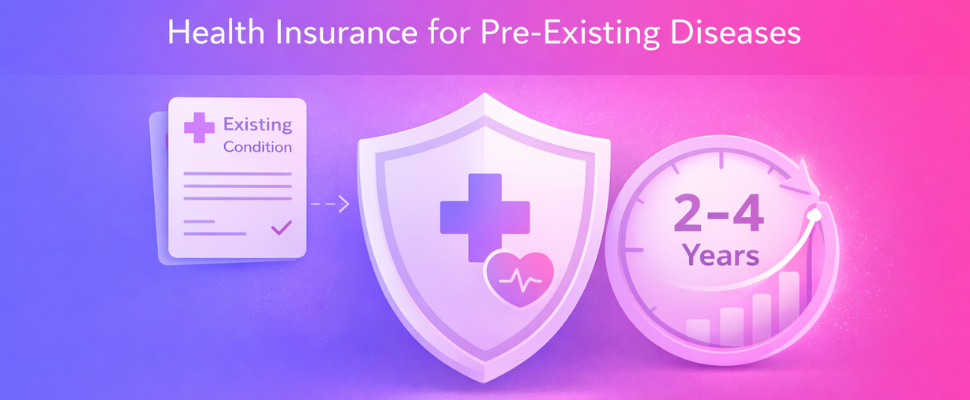
In India, the usual PED waiting period often runs from 24 to 48 months. This is about 2 to 4 years. The exact length typically depends on your insurer and the plan you choose. This time helps companies manage risks.
Some health plans offer special add-ons, or riders. You pay a bit more for these. Such riders can help shorten your pre existing disease cover waiting period. This means you get coverage for long-term conditions sooner. Always look at your policy terms for these choices.
Different types of waiting periods
Confused between health insurance plans?
Let AI decide for you.
- AI compares 30+ insurers
- No sales pressure
- Result in 60 seconds
- 100% free
No spam. No calls unless you want them.
Health insurance plans often have different waiting periods. These are not the same as the wait for a health problem you had before. It is important to know about these periods. This helps make sure your claim is not turned down later. Each waiting period lasts for a set time. They also apply to different health issues.
Here are the key waiting periods you should know:
- Initial Waiting Period: This usually lasts for 30 days. It applies to most claims. But, accidents that are emergencies often get cover right away.
- Some plans have a 1 to 2 year wait for certain listed illnesses. These include cataracts or hernias.
- Pre-Existing Disease Waiting Period: This important period is usually 2 to 4 years long. It covers any health problem you had and told them about before you bought the plan.
Factors to consider when buying health insurance with a pre-existing disease
If you have a pre existing disease and want to buy health insurance, check the policy details carefully. This helps you get the right coverage. It also stops problems later on. Think about these key points before you buy.
Waiting Period for Existing Conditions
Most health insurance plans have a waiting period for a pre existing disease. This is a time you must wait. The insurance company will only pay for costs related to your pre existing disease after this time. This wait is usually 2 to 4 years. For example, if you have diabetes, you will not get money for its treatment during this wait. Always check the exact waiting period in your policy papers. A shorter waiting period is usually better for you.
Sub-limits and Co-payment Rules
Some policies have sub-limits or co-payment rules for a pre existing disease. A sub-limit means the insurer will only pay a certain amount. This applies to specific treatments or hospital stays. Co-payment means you must pay part of the claim yourself. For instance, a policy might ask you to pay 20% of claims for treating a pre existing disease. Understand these money rules before you buy health insurance.
Enough Sum Insured
Choose a high enough sum insured. Medical treatments for a pre existing disease can cost a lot in India. A higher sum insured gives you better money protection. Think about how medical costs
go up over time. Also, consider what future treatments might cost you. For example, if you have heart disease, make sure your sum insured can cover possible surgeries. It should also cover long-term medicine costs.
Telling the Truth and Exclusions
Confused between health insurance plans?
Let AI decide for you.
- AI compares 30+ insurers
- No sales pressure
- Result in 60 seconds
- 100% free
No spam. No calls unless you want them.
Always tell the full truth about your pre existing disease when you apply. This includes all health problems you already have. If you do not tell the truth, the company can reject your claim. Also, some Indian companies might permanently exclude certain serious pre existing disease conditions. Read the policy document carefully to understand all exclusions. This stops surprises when you need to make a claim.
Find your ideal health plan for pre existing diseases with Cover Tiger
Finding good health insurance with a pre-existing disease is often easier than you think. Many plans offer strong pre-existing disease coverage. You can get a policy that truly fits your health needs.
Cover Tiger health insurance provides a smart solution. Our platform uses an advanced AI insurance advisor. This tool gives clear, fair advice, made just for you.
Conclusion
Many people have a pre existing disease. Health insurance can help you manage these conditions.
Always tell your insurer the full truth about your health. Understand the wait time for your specific health problem. Compare different health plans carefully. This helps you find the best coverage.
Making an informed decision puts you in charge. It helps you get the financial protection you need. This protects both your health and your savings.
Frequently Asked Questions
Is high cholesterol a pre-existing condition?
Yes, high cholesterol is typically considered a pre-existing condition if diagnosed or treated before you buy your health insurance policy. IRDAI guidelines often classify any condition treated within 48 months prior as a Pre-Existing Disease. This usually means you'll have a specific waiting period (which can vary) before claims related to it are covered.
What pre-existing conditions need to be declared?
Confused between health insurance plans?
Let AI decide for you.
- AI compares 30+ insurers
- No sales pressure
- Result in 60 seconds
- 100% free
No spam. No calls unless you want them.
You must declare any health condition you've been diagnosed with, received treatment for, or even experienced symptoms from in the past 48 months (this can vary slightly by insurer). This typically covers all major illnesses, injuries, or any ongoing medical issues. Full disclosure is essential for your claim's smooth processing later, as per IRDAI guidelines.
Can an insurer reject my application because of a pre-existing condition?
Insurers can indeed reject an application because of a pre-existing condition. Typically, though, they'll offer you a policy with specific waiting periods or even permanent exclusions for that particular ailment (this is standard practice). You won't want issues later, so honest disclosure during application is always best.
What is the difference between a co-payment and a sub-limit for PEDs?
For Pre-Existing Diseases, a co-payment means you'll pay a fixed percentage of the claim amount. A sub-limit, however, is a maximum cap an insurer sets on specific expenses related to that PED, perhaps for room rent or particular procedures (this can vary by plan). So, co-payment is cost-sharing by percentage, while a sub-limit caps specific claim components regardless of your total sum insured.
Are common illnesses like a cold or fever considered pre-existing diseases?
No, common colds or fevers aren't typically classified as pre-existing diseases by Indian insurers. A pre-existing condition, as defined by IRDAI, is usually a more chronic medical issue diagnosed before your policy started (this can vary slightly). Insurers are typically looking for recurring health problems, not temporary, acute sickness.
Can I transfer my health insurance to a new provider if I have a PED?
You absolutely can port your health insurance even if you have a Pre-Existing Disease. The waiting periods you've already served for that PED typically carry forward to your new policy, as per IRDAI guidelines (this can vary slightly). You'll need to apply for portability well before your current policy's renewal date.
What is 'premium loading' and how does it relate to pre-existing conditions?
Premium loading is essentially an additional charge your health insurer adds to your standard premium. This typically occurs when you declare a pre-existing medical condition, as it increases
the risk of future claims. The extra amount helps cover the anticipated higher medical expenses (this is a standard IRDAI-approved practice, by the way). It's always calculated based on the condition's type and severity.

Written By
Raj Shankar
Principal Officer and General Manager at CoverTiger
With over 7 years of experience in the insurance and fintech industry, Raj Shankar has helped 10,000+ customers secure their families with the right insurance solutions. He has worked with leading brands such as Policybazaar, INDmoney, and CoverTiger, building strong expertise in health insurance, life insurance, sales leadership, and customer advisory. His mission is to make insurance simpler, more transparent, and accessible for every Indian family.