The real use of health insurance shows during a medical problem. Knowing how to make health insurance claims is very important. This choice affects your experience when you need help most.
Typically, two main ways exist to pay medical expenses with your policy. These are cashless and reimbursement claims. This guide explains the difference between them.
Knowing these options helps you pick what is best. Your decision can change financial stress and paperwork during hospital stays. We want to help you understand the right way to settle a claim for your situation.
What is a cashless claim in health insurance?
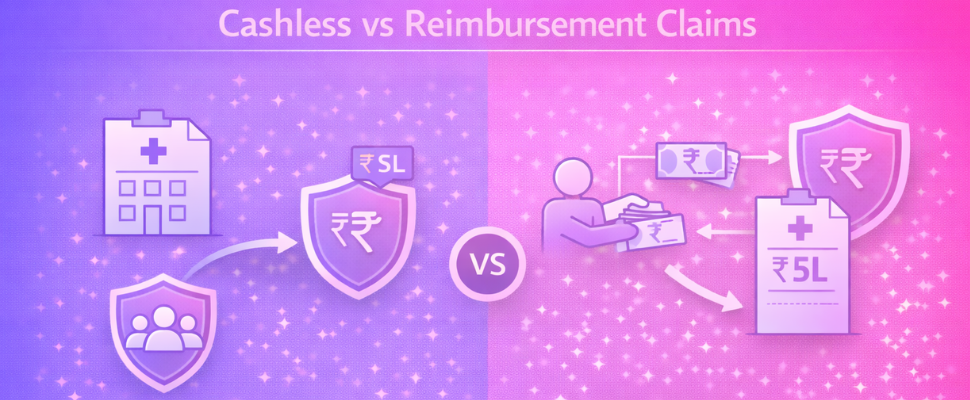
With a cashless claim, your health insurance plan covers your medical bills. You typically do not pay any money yourself at the start. This means no need to pay hospital bills from your own pocket. The insurer pays the approved amount directly to the network hospital. You can only get this cashless claim benefit at hospitals in your insurer's approved network. A Third-Party Administrator (TPA) helps manage this process for you. They work with the hospital and your insurance company. This method makes handling money much simpler. It is a key difference between cashless and reimbursement claims.
What is a reimbursement claim in health insurance?
A reimbursement claim means you pay for your medical treatment first. You cover all hospital bills with your own funds. We call these your out-of-pocket expenses.
• You must then get all original bills, reports, and other required papers.
• Gather these documents to send your claim to the insurance company.
• The insurer usually checks these papers you submit. Then, they pay you back for the medical costs it approves.
• You can use this reimbursement claim type at any hospital. This includes hospitals that are not in your network. This differs from the cashless vs reimbursement claims process.
Key differences between cashless and reimbursement claims
Understanding cashless and reimbursement claims is important for anyone with health insurance. This choice affects how you pay for hospital medical care. What you pick often depends on
several factors. This includes the hospital you choose and what feels easier for you. Also, how much money you have available at that time plays a role.
Here's how these two types of health insurance claims differ:
With a cashless claim, you typically pay very little money yourself. Your insurer, or its Third-Party Administrator (TPA), pays the approved bill directly to the network hospital. For instance, if you get medical care at a Star Health network hospital, they manage the payment. This process usually needs approval before treatment even starts.
In contrast, a reimbursement claim means you pay all hospital bills yourself first. After leaving the hospital, you must gather all original papers. These include your discharge summary, medical reports, and detailed bills. You then send these documents to your insurer. The insurer checks these papers based on IRDAI rules. They then pay you back the approved amount. This method lets you choose any hospital, not just ones in the insurer's network. While getting your money back might take a little longer, it offers more choice.
Payment flow
Policyholders should understand the difference between cashless vs reimbursement claims. The way your insurance company pays for treatment differs for each type.
Confused between health insurance plans?
Let AI decide for you.
- AI compares 30+ insurers
- No sales pressure
- Result in 60 seconds
- 100% free
No spam. No calls unless you want them.
For a cashless claim, your insurance company pays the hospital directly. This happens at hospitals that partner with your insurer. Examples include Star Health or HDFC ERGO network hospitals. You only pay for items not covered. These might be certain supplies or non-medical costs. This reduces the money you pay upfront during a hospital stay.
With a reimbursement claim, you pay the hospital's full bill first. After leaving the hospital, you gather all original documents. This includes your claim form and discharge summary. You then send these papers to your insurer. The insurance company pays you back later. They will check your papers and confirm the costs before paying for covered treatments. This process is different from a cashless claim.
Here are some key things to remember about cashless vs reimbursement claims: * Cashless claims mean direct payment if you use network hospitals. * You pay hospital bills first with reimbursement claims. * Proper documents are needed for approval in both cases. * A reimbursement claim works at any hospital, even non-network ones. * This helps you understand how medical bills are settled.
Which hospitals you can use
How you choose a hospital changes with cashless vs. reimbursement claims. For cashless claims, you must use hospitals that work with your insurance company. This means you have fewer choices. But for reimbursement claims, you can pick any hospital you like.
• Cashless: You must go to hospitals connected to your insurance company.
• You can choose any hospital for a reimbursement claim.
• Best For: Patients who want to pick their own hospital for their treatment.
How the claim process and documentation work
Understanding cashless vs reimbursement claims means knowing their different steps. For cashless claims, you must get approval beforehand. Your insurance company or its Third Party Administrator (TPA) typically gives this nod. You need to be in a hospital from their list. Show your health card and ID for planned care there.
When it's a reimbursement claim, you pay all hospital costs yourself initially. After you leave, collect all original bills and reports. Then, give these papers to your insurer for the money back.
• Cashless Process: Get approval before you go in; then just show your health card and ID upon admission.
• Reimbursement Process: You pay the hospital first. Later, send all original bills and medical reports to your insurer.
How long settlement takes
Claim payment speeds differ for cashless and reimbursement options. Cashless claims usually get processed faster. You often get approval within a few hours while in the hospital. Reimbursement claims take longer to settle. It might be up to 30 days after all papers are sent.
• Cashless: Approval happens quickly at the hospital.
• Reimbursement takes a few weeks to pay out.
Good for: Those needing immediate payments during hospital stays.
When should you opt for a cashless claim?
Your choice between cashless vs reimbursement claims depends on your needs. A cashless claim is often better if you want things easy and need money fast. Its benefits are clearest in these situations:
• When you plan a hospital visit. You can pick a network hospital before you go
. • For a medical emergency. This helps lower your worry about finding money quickly.
• Enjoy simple claims. These claims usually need less paperwork and follow-up.
• Your health insurance plan pays hospital costs directly. This helps you spend less of your own money during your stay.
Confused between health insurance plans?
Let AI decide for you.
- AI compares 30+ insurers
- No sales pressure
- Result in 60 seconds
- 100% free
No spam. No calls unless you want them.
When is a reimbursement claim necessary?
Knowing about cashless versus reimbursement claims really helps. Sometimes, with a reimbursement claim, you must pay first. Later, you get the money back from your insurance company.
• You choose to get treatment at a hospital outside your insurer's network. This is a common reason for non-network care.
• Your insurance provider turns down a cashless claim request. This can happen due to various reasons.
• An emergency sends you to the closest hospital. This facility might not be in your insurer's list.
• Forgetting your health insurance papers when you enter the hospital. You then cover the medical bills yourself.
How Cover Tiger helps you find plans with the best cashless network
Using a cashless service depends on your insurer’s hospital network. A large, strong cashless hospital network means you get medical care easily. This prevents you from paying a lot of money upfront when you need treatment.
Cover Tiger helps you check this key feature. Our AI insurance comparison tool simplifies how you compare health insurance plans. It clearly shows each insurer’s network quality.
You can use Cover Tiger to find plans by hospitals in your city. This helps you get plans with the best cashless network hospitals. We aim for clarity. We help you make a smart choice between cashless and reimbursement claims. This ensures you get real support when it matters most.
Which claim process is better for you, cashless or reimbursement?
Understanding cashless vs reimbursement claims is an important part of choosing your health insurance. You can select one of these two claim types. The best claim process depends on your specific needs. Many policyholders find cashless claims simpler to manage. With a cashless claim, you usually pay less money upfront at the hospital.
Reimbursement claims offer important flexibility. They let you get coverage even at hospitals outside your insurer's network. This option provides wider access to healthcare facilities.
To choose the health insurance claim that suits you, think about your priorities. Cashless claims are often preferred for their ease. They also reduce immediate financial stress. Reimbursement options ensure you have coverage almost anywhere you go.
Before you decide between cashless vs reimbursement claims, check your insurance company's list of network hospitals. This step helps you pick the best claim choice for your health plan.
Conclusion
This health insurance summary covered cashless and reimbursement claims. For cashless claims, your insurer pays hospitals directly. With reimbursement claims, you first pay for hospital care. Then, your insurer pays you back.
Always check the list of network hospitals. Before you buy any policy, understand the claim process. Use a comparison platform to make an informed decision for your health insurance.
Confused between health insurance plans?
Let AI decide for you.
- AI compares 30+ insurers
- No sales pressure
- Result in 60 seconds
- 100% free
No spam. No calls unless you want them.
Frequently Asked Questions
What does 70% reimbursement mean?
70% reimbursement means your health insurance policy will pay 70% of your approved hospitalisation expenses. You'll then need to cover the remaining 30% yourself, typically because of a co-payment clause in the policy (this is very common). This feature usually helps reduce your premium.
What is the difference between payment and reimbursement?
Cashless payment means your insurer directly settles the hospital bill (typically with network hospitals). For reimbursement, you pay the hospital first, then your insurer repays you for eligible medical expenses once you submit all documents. The key difference is who pays upfront; it's either your insurer or you.
What are the two types of health insurance claims?
So, broadly, we have two types of health insurance claims: cashless and reimbursement. In a cashless claim, you receive treatment at a network hospital, and your insurer pays the hospital directly (after approval). For reimbursement, you'll first clear the hospital bills yourself, then submit those original documents to your insurer, and they typically process your repayment.
Are there any expenses I need to pay out-of-pocket even with a cashless claim?
You'll typically have to pay for certain expenses even with a cashless claim. These usually include your policy's deductible, any co-payment (depending on the plan), and non-medical items like registration fees or specific consumables. Your insurance document clearly outlines these exclusions, so it's always good to review it thoroughly (especially for Indian insurers).
What is the role of a Third-Party Administrator (TPA) in the claims process?
A TPA is an IRDAI-licensed agent managing your health insurance claims on the insurer's behalf. For cashless treatments, they'll coordinate hospital pre-authorization and handle the direct settlement. In most cases, for reimbursement claims, they verify your medical documents (like bills and reports) before passing them to the insurance company for final approval.
Can I switch between cashless and reimbursement claims for different treatments under the same policy?
You can absolutely switch between cashless and reimbursement options for different treatments under the same health policy. For planned procedures at a network hospital, you'll typically opt for cashless settlement. If it's an emergency or a non-network hospital (this can vary), you'd then go for reimbursement, paying upfront and submitting the bills to your insurer.

Written By
Raj Shankar
Principal Officer and General Manager at CoverTiger
With over 7 years of experience in the insurance and fintech industry, Raj Shankar has helped 10,000+ customers secure their families with the right insurance solutions. He has worked with leading brands such as Policybazaar, INDmoney, and CoverTiger, building strong expertise in health insurance, life insurance, sales leadership, and customer advisory. His mission is to make insurance simpler, more transparent, and accessible for every Indian family.