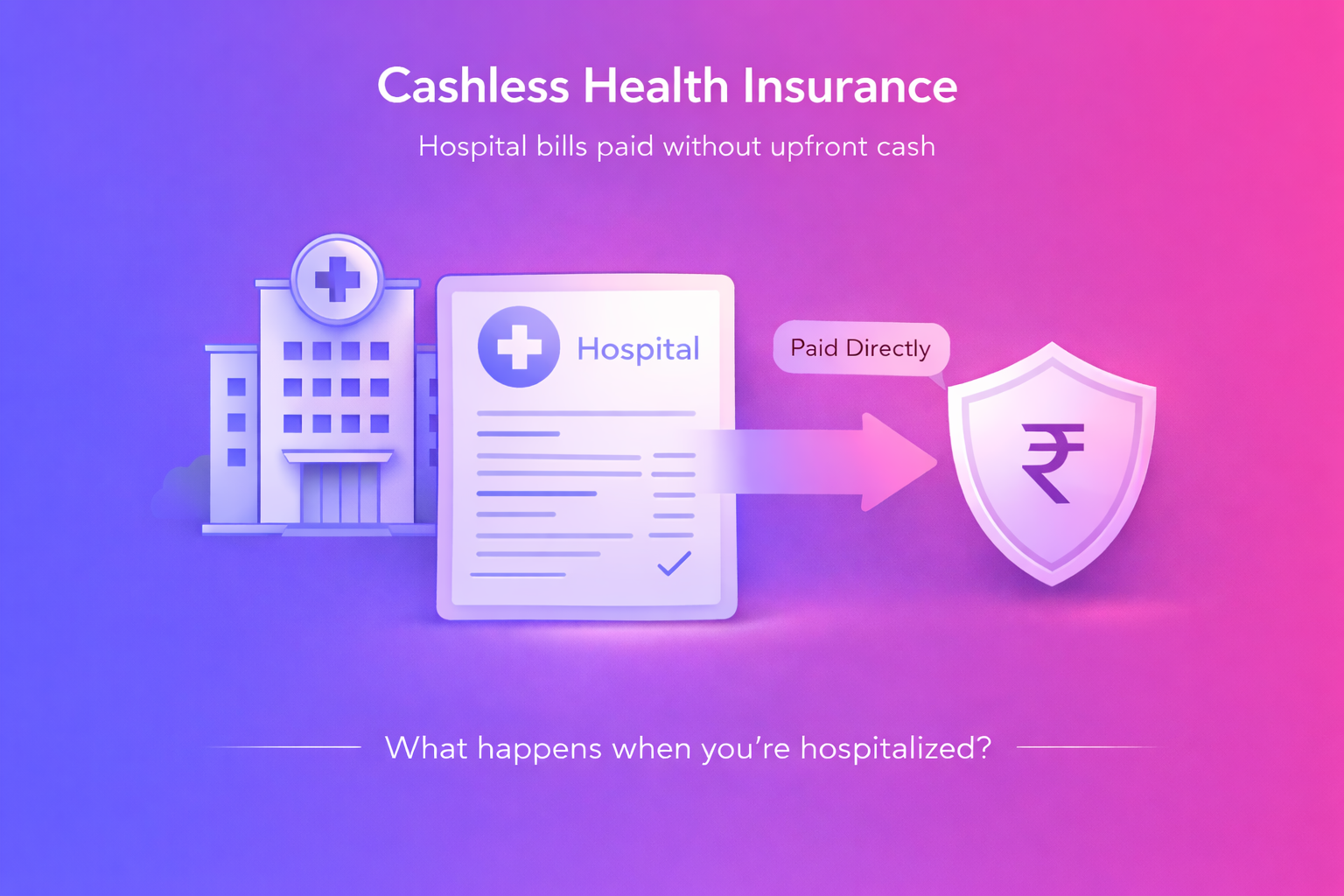
Cashless health insurance pays your medical bills straight away. Your insurer typically pays the hospital for treatments that are approved. This system helps you avoid looking for cash during a hospital stay. However, it only works at hospitals in your insurer's network.
This plan offers quick help during medical emergencies. You will not need to use up your savings or get quick loans. Good financial planning often needs this strong safety net. It can give peace of mind when urgent medical care becomes necessary.
Rising healthcare costs in India are a challenge for many families. Choosing the right cashless health insurance plan offers a good solution. It gives a helpful way to manage unexpected medical expenses.
What is cashless health insurance?
Cashless health insurance means your insurer pays the hospital directly. They pay for your medical care. You do not have to pay the bills yourself first. This service helps your insurance company easily pay approved hospital costs. This direct payment system works between your insurer and its network hospitals.
With cashless insurance, you usually only pay for non-medical items. These can be things like registration fees or certain supplies. This benefit is only available at hospitals. These hospitals must be part of your insurance company's network.
Cashless medical plans often cover hospital room rent, surgeon fees, and needed tests. They pay for these up to your total insured amount. But your plan often does not cover things like toiletries or food for companions. It is also important to know about any waiting period for certain health problems before you make a claim.
How Cashless Medical Insurance Works
Cashless medical insurance typically makes hospital stays much simpler. This process relies on direct teamwork when you need treatment.
Upon hospital admission, show your health insurance card and a valid ID. The hospital’s insurance desk then sends an approval request. This request often goes to your insurance company or their Third Party Administrator (TPA).
The TPA reviews your documents and approves the treatment amount. With approval, the hospital provides care. Your cashless health insurance covers these approved medical costs.
When you leave, the hospital sends the final bill to the TPA. The TPA pays the hospital directly. You only pay for items not included in your plan.
What is the role of network hospitals?
Network hospitals are special medical centers. They work directly with your insurance company to handle your bills. These places are key for cashless health insurance. They usually agree on treatment prices before you arrive. This direct link often makes hospital stays simpler for people with insurance.
- Your insurance company usually pays hospital costs straight to the hospital.
- These hospitals charge rates for treatments that were agreed on earlier.
- You do not need to pay large amounts of money at first.
- Always check your insurance company’s newest list of network hospitals.
Best For: People with insurance who like their hospital bills to be paid directly. This means they usually do not pay themselves first.
Pre-authorization process works
Pre-authorization means your insurer agrees to pay for your planned medical costs. This step helps settle your hospital bills before you get treatment. It is key for using cashless health insurance well.
- For planned hospital stays, send your requests usually 2-3 days before the treatment.
- Tell your insurer about emergency hospital stays within one day of reaching the hospital.
- Give them the doctor's certificate and a filled-out pre-authorization form.
- Your insurer will check the estimated cost and any co-payment rules.
Confused between health insurance plans?
Let AI decide for you.
- AI compares 30+ insurers
- No sales pressure
- Result in 60 seconds
- 100% free
No spam. No calls unless you want them.
Best For: Getting approval before medical care, making your hospital stay easier.
Claim Settlement Process
Once your treatment is complete, the hospital prepares the final bill. This detailed bill then goes straight to your insurance company. This process makes sure your cashless health insurance covers all allowed services. It makes the move from getting care to paying the bill simple.
- The hospital sends your final detailed bill to the insurer.
- Your insurer usually checks this bill against the first approval given.
- They also look at it carefully against your policy rules and coverage limits.
- You will usually pay for any non-medical items yourself before you leave.
Best For: People with a policy who want Indian insurance companies to handle their medical bills directly.
Why cashless health insurance plans make sense
Cashless health insurance plans truly help people get medical care more easily. These plans often reduce financial stress from big medical bills during difficult periods. This system lets you manage costs without paying cash upfront.
- Less Financial Worry: You do not need to find a lot of money suddenly. The insurer typically pays approved treatment bills directly to the hospital. This lets families focus on a patient getting well.
- Medical help can be very fast with cashless service. There are no delays while looking for money to enter the hospital. This is important for emergencies or treatments needing quick action.
- Good Healthcare Access: Many Indian insurance companies partner with various hospitals. These hospitals usually offer quality healthcare and good service. This gives people with insurance access to good hospitals across the country.
- The hospital's insurance desk handles most of the claim paperwork. They talk directly with your insurance company. This makes the cashless claim process simpler, saving families from complex forms.
Cashless health insurance Vs reimbursement plans:
Knowing the difference between cashless health insurance and reimbursement helps you pick the best plan. These are the two main ways your policy pays hospital bills.
With cashless health insurance, your insurer pays the network hospital directly. This applies to treatments they approve. This way greatly lowers the money you pay right away. You will not need to arrange much money during your hospital stay. But you must choose a hospital within your insurer's approved network.
Reimbursement plans let you get treatment at any hospital. This includes places not in the network. You first pay all hospital bills yourself. Later, you send the original bills and papers to your insurer or Third Party Administrator (TPA). The insurer then pays you back. They pay up to your sum insured and policy coverage. This offers more choice in hospitals. But you pay big costs first and handle more paperwork.
How to choose the best cashless health insurance
Finding the best cashless health insurance means you need to compare many plans. Several Indian companies offer options, like HDFC ERGO, and ICICI Lombard. Cover Tiger helps simplify your search with its smart platform. This tool quickly compares the best cashless medical insurance plans for you.
The platform uses clever filters. You can choose your area or specific hospitals. This finds plans with network hospitals near your home or office. Getting care becomes easy when you need it most. The system offers fair advice. It uses current policy details to compare insurance well. Also, it shows how often insurers pay claims. This helps you pick a policy you can trust.
You can easily get the best cashless health insurance for your needs. Always check important things. Look at what the policy covers, its waiting period, and any no-claim bonus benefits. Cover Tiger guides you to make a smart choice and protect your money.
Benefits of Cashless Health Insurance
Cashless health insurance is one of the most valuable features in modern health coverage. Instead of paying out of pocket and waiting for reimbursement, you walk into a network hospital and the insurer settles the bill directly. Here's why it matters:
Confused between health insurance plans?
Let AI decide for you.
- AI compares 30+ insurers
- No sales pressure
- Result in 60 seconds
- 100% free
No spam. No calls unless you want them.
1. No Upfront Financial Burden
Medical emergencies rarely come with advance notice. With cashless coverage, you don't need to arrange large sums of money at the last minute. Whether it's a planned surgery or a sudden hospitalization, the insurer pays the hospital directly — you focus on recovery, not fundraising.
2. Stress-Free Emergency Care
In a crisis, the last thing you want to worry about is arranging funds. Cashless insurance removes that mental load entirely. You present your health card at the network hospital, the claim gets pre-authorized, and treatment begins without financial delay.
3. Faster Treatment Initiation
Waiting to gather money can cost precious time during medical emergencies. Since payment approval happens digitally between the insurer and hospital, treatment can begin almost immediately after admission — sometimes within an hour of authorization.
4. Paperwork is Minimized
In a reimbursement claim, you collect every bill, prescription, and discharge summary and submit them later — hoping nothing gets rejected. With cashless claims, the hospital's TPA (Third Party Administrator) desk handles most of the documentation on your behalf.
5. Protects Your Savings
Without cashless insurance, people often dip into their emergency funds, fixed deposits, or even take loans to cover hospital bills. Cashless coverage acts as a financial shield, keeping your savings intact for what they were actually meant for.
6. Transparent Billing
Since the insurer deals directly with the hospital, there is greater accountability in billing. Hospitals are less likely to inflate costs when they know a trained claims team is reviewing the invoice line by line.
7. Pre and Post Hospitalization Coverage
Good cashless policies don't just cover the hospital stay — they also cover diagnostic tests done before admission and follow-up consultations after discharge. This gives you end-to-end protection across the full treatment cycle.
8. Planned Procedures Are Hassle-Free
For scheduled surgeries like knee replacements or cataract operations, you can get pre-authorization days in advance. This means everything is arranged before you even step into the hospital, making the entire experience smooth and organized.
9. Wide Network of Hospitals
Most insurers maintain a large network of empanelled hospitals across cities and towns. This gives policyholders the freedom to choose a good hospital near them while still enjoying the cashless benefit — without being locked into a single facility.
Things to Consider Before Choosing Health Insurance
Confused between health insurance plans?
Let AI decide for you.
- AI compares 30+ insurers
- No sales pressure
- Result in 60 seconds
- 100% free
No spam. No calls unless you want them.
When you pick a cashless health plan, look beyond just its price. Focus instead on how dependable the plan is for paying claims. Over time, this brings real peace of mind.
Insurer Reliability and Network
- Always check how many claims the insurance company pays out. This shows their trustworthiness.
- See which hospitals in your area work with the plan.
- A good hospital network lets you easily use your cashless health insurance.
Policy Riders and Benefits
- Look for extra benefits that can make your plan much better.
- Consider options like cover for OPD visits or critical illness boosters.
- A no-claim bonus typically adds value as years pass.
Waiting Periods
- Understand how long you must wait for coverage of pre-existing diseases.
- Know when cashless benefits for certain health issues become active.
- Most new policies have an initial waiting period before you can claim.
Conclusion
Cashless health insurance gives you key money help for medical problems. It stops you from paying upfront at partner hospitals. Always check your insurer's network hospital list. Also, look at
their claim settlement ratio before buying any plan. This helps you get approval easily when you need it.
For lasting family safety, pick full family health insurance. A good sum insured protects your family from rising medical costs. Use cover Tiger AI platform to compare plans from insurers. This helps you choose well without pressure and keeps your money safe.
Frequently Asked Questions
Q: What are the new rules for cashless health insurance?
The IRDAI has mandated that all eligible health insurance claims must be processed cashless. Insurers typically can't deny cashless settlement for valid claims, even if the hospital isn't directly on their network panel (provided it's a registered facility). This has really expanded access across India, making things much smoother for policyholders.
Q: How long does it take for cashless insurance approval?
Planned hospitalisations usually see cashless approval within 2 to 4 hours, once the hospital submits documents to your insurer's TPA. Emergencies, however, are fast-tracked; you'll typically get approval in 30-60 minutes (this depends on the medical urgency). Any missing paperwork, though, can certainly slow the whole process down.
Q: What is not covered in cashless health insurance?
It typically doesn't cover non-medical items like registration fees, new gloves, or a visitor's pass. Expenses for pre-existing diseases during their specified waiting period aren't usually included. You'll also find certain treatments, especially cosmetic ones or those during initial policy waiting periods, are often excluded (always refer to your specific IRDAI-approved policy wording).

Written By
Raj Shankar
Principal Officer and General Manager at CoverTiger
With over 7 years of experience in the insurance and fintech industry, Raj Shankar has helped 10,000+ customers secure their families with the right insurance solutions. He has worked with leading brands such as Policybazaar, INDmoney, and CoverTiger, building strong expertise in health insurance, life insurance, sales leadership, and customer advisory. His mission is to make insurance simpler, more transparent, and accessible for every Indian family.