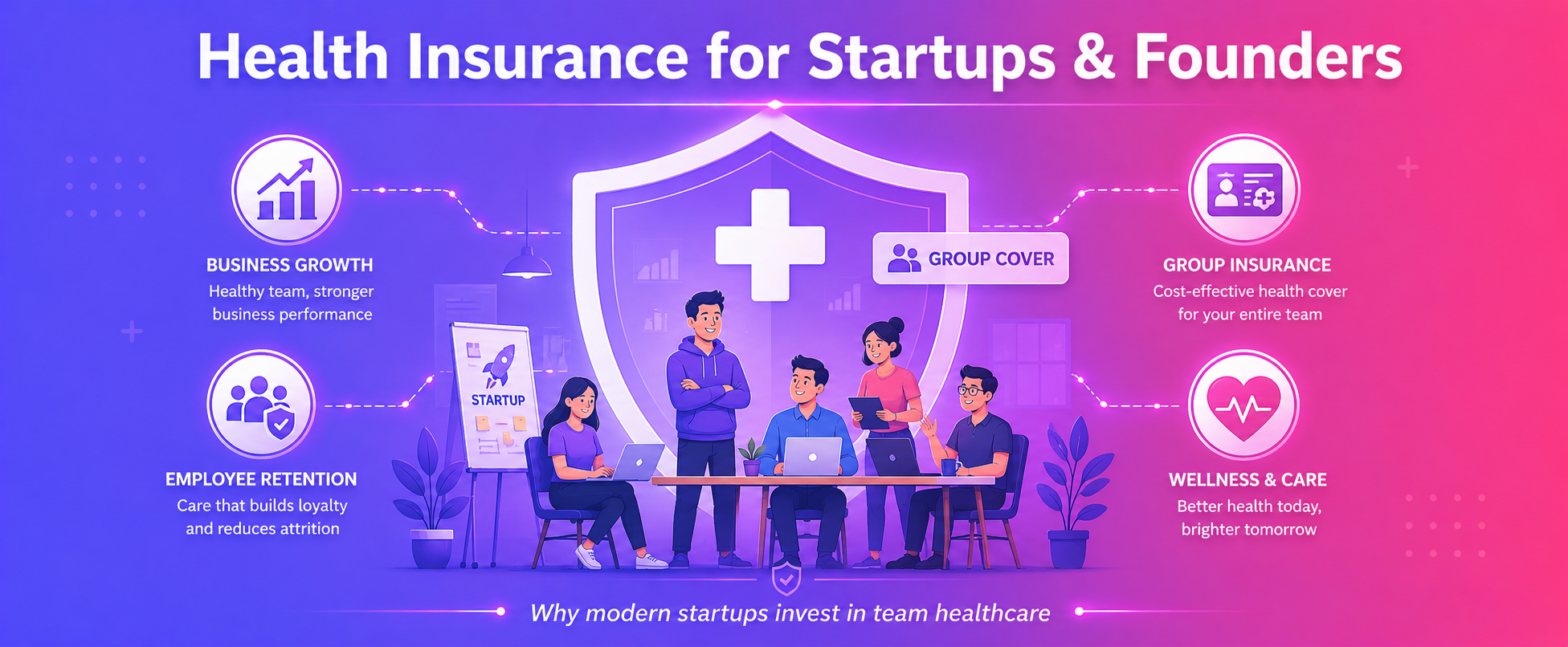
New businesses often struggle to find and keep good staff. Good pay alone is usually not enough now. A strong employee benefits package is very important for hiring skilled people.
Giving group health insurance in India is a smart move for any startup. It clearly shows a company cares about its team's health. This benefit can also save money. It supports employees and helps them stay loyal. For modern businesses, health insurance for startups is key, not just pay.
This guide will help you pick the right plan. We will look at specific benefits. You will also understand what each plan covers and its cost. Websites like Cover Tiger make it simple to compare and choose good health insurance for startup companies.
What is Health Insurance for Startups & Founders?
Startups health insurance is medical insurance coverage for founders, co-founders, and employees of new companies. These can be individual policies for founders, or group health insurance policies that cover the whole team under one umbrella.
Startup insurance plans offer more flexibility, scalability and affordability than traditional corporate insurance. They are designed to fit smaller teams, changing team sizes and budget limits, but still providing full cover.
For founders this insurance is a business asset that can enhance employer branding and a personal financial protection.
Why group health insurance for startups is a strategic investment
Giving group health insurance is a very good step for any new business. It helps attract and hold onto skilled employees in India's competitive job market. Many startups often ask, why should startups offer health insurance? This decision brings several clear benefits.
- Attract the Best People: Good workers typically look for strong benefits packages. A solid health plan can help you get top talent.
- Employees worry less about medical bills. This reduction in stress and fewer sick days usually improves how much work they get done. These are important health benefits for startups.
- Tax Savings: Money an employer pays for group health insurance for startups counts as a business cost. You can often reduce your taxable income under Indian tax rules. This is a major benefit of group health insurance for a small business and also helps health insurance for startup founders.
- A company looks better to its staff when it offers full care. This shows you truly care about your team's well-being. It helps highlight that your company offers the best health insurance for startups.
Types of Health Insurance Suitable for Startups
1. Individual Health Insurance for Founders
At the early stage, many founders opt for individual health insurance policies. These plans provide dedicated coverage, customizable benefits, and long-term advantages such as no-claim bonuses and continuity benefits.
This option works well for solo founders or very small teams who are not yet ready to invest in group insurance.
2. Family Floater Plans
Some founders prefer family floater plans that cover themselves along with their spouse, children, and sometimes parents. This is a cost-effective way to ensure broader coverage without managing multiple policies.
However, the total sum insured is shared among all members, which can be a limitation during multiple claims.
Confused between health insurance plans?
Let AI decide for you.
- AI compares 30+ insurers
- No sales pressure
- Result in 60 seconds
- 100% free
No spam. No calls unless you want them.
3. Group Health Insurance for Startups
As the team grows, startups typically shift to group health insurance policies. These plans cover all employees under a single policy and often come with lower premiums per person compared to individual plans.
Group insurance also offers additional benefits such as coverage for pre-existing diseases from day one, maternity benefits, and fewer restrictions.
This type of insurance is particularly valuable for startups looking to build a strong employee value proposition.
4. Top-Up and Super Top-Up Plans
To enhance coverage without significantly increasing premiums, founders often opt for top-up or super top-up plans. These plans activate after a certain deductible is crossed and provide additional financial protection during high-cost medical events.
They are especially useful when combined with a base policy.
What key coverage should startups look for in a health plan?
Startups need to plan for health coverage. This protection should cover hospital stays, small medical procedures, and existing health issues. It is best if it starts right away. This forms the base of good health insurance for startups. For the best health insurance for startups, always look for full coverage options.
Here is what does startup health insurance cover in most cases:
* In-patient care: This pays for hospital room fees, nurse help, and doctor visits.
* Costs before and after hospital stays are often included.
* Ambulance charges: Emergency rides are usually covered.
Newer features are must-have features in a group health plan. These often include online doctor calls and mental health help. Maternity benefits and wellness programs are also very helpful. People often ask, does group health insurance cover pre-existing diseases? Many group plans do, often with no waiting periods.
Family floater options are important. They protect an employee's spouse, children, and sometimes even parents. This makes sure there are strong health benefits for startups and their teams. This also includes health insurance for startup founders.
How to choose the right health insurance plan for your team
New companies often need health insurance. Founders frequently ask, "How do I pick a health insurance plan for my employees?" It helps to look at some important areas. This makes sure the plan works for your team and your company's money. These are the main things to think about for startup health insurance.
Confused between health insurance plans?
Let AI decide for you.
- AI compares 30+ insurers
- No sales pressure
- Result in 60 seconds
- 100% free
No spam. No calls unless you want them.
Coverage Details Decide how much medical care the plan will pay for. This often includes hospital stays. It also covers costs before and after the hospital, and maternity care.
- Look for plans with shorter waiting periods. This is key for health issues people already have.
- Make sure the plan pays enough money. This is for big sicknesses in your city.
- Check if the plan covers doctor visits and treatments outside a hospital. These are called OPD expenses.
- Network Hospitals A wide group of hospitals makes it easier for your team to get care in different places.
- Check if the hospitals your employees prefer in key areas are part of the plan.
- A strong network with major Indian hospitals like Apollo or Fortis is usually helpful for quick access.
Premium Cost and Budget You need to find a good balance. This is between full coverage and what your startup can pay. Prices can change a lot between different Indian insurance companies.
- Compare prices from various health insurance providers for startups. These include Star Health, HDFC ERGO, or Niva Bupa.
- Think about if you can afford the plan for a long time when it is time to renew.
Insurer's Name and Help Choose an insurance company known for paying claims well. They should also offer good customer support.
- Look into how often they pay claims. Also, read what other customers say about them online.
- Understand how to add or remove employees from the plan as your team changes.
Policy Flexibility Some plans let you change them. This is based on what your employees need or your company's rules.
- Check for choices to include family members with the employee's plan.
- Understand the rules for renewing the plan. Also, know if you can move it to another company if needed.
IRDAI Rules and Tax Benefits Make sure the plan follows IRDAI rules for group plans. Group health insurance also gives tax benefits on health insurance India for the company.
- Confirm the plan follows all current IRDAI rules for group health insurance policies.
- Always talk to a tax expert about Section 80D rules for your company's insurance payments.
What health insurance for a startup actually costs
Many startup founders often ask how much group health insurance costs for their company. The answer depends on a few key things. Group health plans usually cost less per person than individual policies. This way helps save money, because the risk is shared among more employees. Offering good health insurance is a key part of your startup's benefits for employees.
The premium for employee health insurance is set by several factors:
* Your team's average age. * The chosen sum insured.
* Any extra benefits you select.
* The city or region where your employees live.
The sum insured is the most money the insurance company will pay for medical treatment. For many Indian startups, a sum insured of 3-5 lakh per employee is a common starting point. This usually gives enough coverage for most medical needs. To understand the full cost, you must also look at these coverage levels. This business expense is also tax-deductible under Indian law.
This helps lower the company's overall financial impact.
Confused between health insurance plans?
Let AI decide for you.
- AI compares 30+ insurers
- No sales pressure
- Result in 60 seconds
- 100% free
No spam. No calls unless you want them.
Conclusion
Health insurance for startups is more than an employee perk. It truly helps a business grow and stay strong long-term. Investing in good employee benefits keeps your team healthy and well. This also protects your company from sudden medical bills.
Picking the right small business health insurance means finding a good balance. These plans should give your employees full coverage. They also need to fit within your startup's budget. Prioritizing this choice typically builds a strong, happy team.
Founders often view this as a smart investment. Using a clear comparison tool can make selecting a plan easier. This helps you choose well for your team's health and your company's future.
Frequently Asked Questions
Q: Do startups give their employees medical cover?
Many Indian startups do offer medical cover to their employees, typically through group health insurance plans. It's an effective strategy for them to attract talent and provides employees with cashless treatment options (this will depend on the insurer's network). Employees might also see potential tax deductions under Section 80D for any personal contributions.
Q: What is the best health insurance for a small business owner?
The best health insurance for a small business owner primarily depends on if you have employees. If you do, a group health policy is typically ideal, offering full coverage and tax benefits under Section 80D (always check with your financial planner). For sole proprietors, a robust individual or family floater plan from an IRDAI-approved insurer works well. It's about matching the plan to your specific needs and budget.
Q: Do startups need insurance?
Startups absolutely require insurance; it's crucial for safeguarding both your operations and your team. Group health insurance, especially, is a cornerstone in India, helping retain talent and offering tax benefits under Section 80D (this can vary). Beyond that, general liability or property policies typically protect your assets from unforeseen business risks. You'll want full coverage.
Q: How many employees are required to purchase a group health insurance policy?
Most Indian insurers typically ask for 7-10 employees to start a group health plan. For startups, however, some providers might even consider a minimum of 5 (this can vary greatly). It's always best to check directly with an IRDAI-licensed advisor like myself for the latest on eligibility.
Q: Can I cover the parents of my employees under a group policy?
Many Indian group policies do allow covering employees' parents, usually as an add-on or a higher plan variant. There's typically an extra premium involved (this can be borne by employee or company). Employees can claim Section 80D tax benefits for premiums they pay. You'll need to confirm specific eligibility and costs with your chosen insurer.

Written By
Raj Shankar
Principal Officer and General Manager at CoverTiger
With over 7 years of experience in the insurance and fintech industry, Raj Shankar has helped 10,000+ customers secure their families with the right insurance solutions. He has worked with leading brands such as Policybazaar, INDmoney, and CoverTiger, building strong expertise in health insurance, life insurance, sales leadership, and customer advisory. His mission is to make insurance simpler, more transparent, and accessible for every Indian family.