Health insurance rules in India often change. The IRDAI keeps policyholders safe. This body sets rules for all Indian insurance companies.
For 2026, IRDAI introduced new changes for customers. These IRDAI rules for health insurance aim for more clarity. They also make it easier to get coverage. Typically, getting claims paid will become simpler for many people.
This guide helps you understand these key changes. Knowing your policy terms helps you make smart choices about your health coverage.
What are the most important IRDAI health insurance rules in 2026?
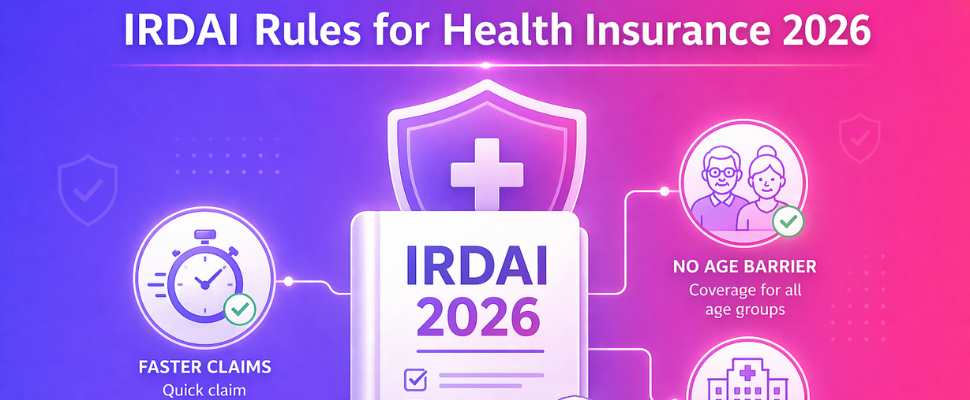
The new IRDAI health insurance guidelines 2026 bring important changes for policyholders in India. These irdai guidelines in health insurance aim to directly benefit individuals buying health insurance plans. They outline key updates for health insurance coverage. Here is a summary of these new IRDAI health insurance guidelines:
• You can now buy a new policy without an age limit of 65 years.
• Waiting periods for existing health issues are now capped at 36 months.
• The moratorium period is now 60 months. After this time, insurers typically cannot deny claims for not sharing information.
• Insurers must process cashless claims faster. Clear timelines are set for approvals.
• The new IRDAI rules ensure AYUSH and modern treatments are covered without sub-limits.
Major policy changes impacting your coverage and claims
New rules for health insurance from IRDAI matter to every policyholder. These new IRDAI health insurance guidelines make things clearer. They also give customers stronger protection.
just for, the new IRDAI health insurance guidelines 2026 bring key changes. We will review these important IRDAI rules for health insurance. These guidelines affect coverage for old health issues. They also impact moving your policy or renewing it for life. Knowing these changes helps you handle your health plan better.
No more age barriers in health insurance
New IRDAI rules for health insurance change things. Insurers cannot now deny a new policy simply due to your age. This helps older Indians get important health protection.
• You can now buy a new health insurance plan at any age.
• Insurers will not reject applications just because of the person's age.
• Still, medical checks and premiums based on age usually apply. Best For: Older citizens who want to buy their first health insurance plan.
Shorter waiting and moratorium periods mean faster access to care
New IRDAI rules for health insurance now offer important help to policyholders. One big change is a shorter wait for existing health issues. The longest wait period is now 36 months. This is much shorter than the old 48 months. This update lets people get medical care faster for their health problems.
The moratorium period has also become shorter. It now stands at 60 months, or five years, from when your policy begins. After this time, insurers usually cannot fight claims for not telling them something. The only time they can is if they prove fraud. This gives policyholders more peace of mind about future claims.
• Waiting time for pre-existing conditions is now 36 months.
• You can get cover for your existing health issues sooner.
• The moratorium period is now five years.
• Insurers cannot dispute claims after 60 months unless fraud is clearly shown.
Best For: People with existing medical conditions who want faster coverage and more claim security.
Confused between health insurance plans?
Let AI decide for you.
- AI compares 30+ insurers
- No sales pressure
- Result in 60 seconds
- 100% free
No spam. No calls unless you want them.
How the 'Cashless Everywhere' initiative simplifies claims
The 'Cashless Everywhere' plan makes filing claims easier. These are new irdai rules for health insurance. Now, you can get cashless hospitalization at any hospital. This even includes places not in your insurer's main list. Still, your policy rules will apply. Get approval for treatment typically within 1 hour. You should also get discharge approval within 3 hours.
• It reduces the immediate money you spend in emergencies.
• You get more options for hospitals.
• This makes getting claims approved faster.
Best For: Those who want more hospital choices and quick claim approvals.
New IRDAI health insurance guidelines on affordability and transparency in 2026:
The IRDAI rules for health insurance make costs easier to understand. More people can now get policies easily. Policyholders find their choices clearer. This part looks at important money updates.
For example, we talk about if GST applies to health insurance. We also discuss how much health insurance premiums can go up for senior citizens. Another topic is how health insurance companies get their ratings in India. These updates usually help build customer trust.
Is GST exempt on health insurance?
The GST Council made a key choice. Individual health insurance plans no longer have 18% GST. This makes personal health cover notably cheaper. Yet, employers still add GST for group health plans.
• Lowers what people pay for their own insurance policies.
• Helps more people get important health safety.
• Follows the new IRDAI rules for health insurance.
Best For: Individuals and families seeking more affordable personal health protection.
How are senior citizen premiums regulated under IRDAI rules for health insurance?
New IRDAI rules for health insurance now help senior citizens. These rules limit how much yearly premiums can increase for people 60 and older. This increase is usually 10%. Any bigger increase needs IRDAI's approval first. This stops big, sudden premium shocks.
• Your yearly premium usually will not rise over 10% if you are 60 or older.
• IRDAI approval is needed if an insurer increases premiums more than 10%.
• This protects older policyholders from very high, surprise costs.
Best For: Older policyholders who want steady and clear health insurance prices.
Confused between health insurance plans?
Let AI decide for you.
- AI compares 30+ insurers
- No sales pressure
- Result in 60 seconds
- 100% free
No spam. No calls unless you want them.
What are insurer performance scorecards?:
New irdai rules for health insurance are coming. They will bring in performance scorecards. These scorecards start in June 2026. They cover both insurance companies and hospitals. The scorecards will show how good their service is. This helps people pick the right insurance plan. You can compare companies by their service, not just cost.
• It tracks how fast claims get paid.
• Hospitals' billing accuracy will be checked.
• Customer grievances will be noted, showing how happy policyholders are.
Best For: People with health insurance who wish to compare companies based on service quality and trust.
How to make smart health insurance decisions in 2026:
Learning about the new irdai rules for health insurance is the first step. Then, use this knowledge to pick and handle your policy well.
Tips for buying health insurance after new IRDAI rules
• Check your old policy's Customer Information Sheet (CIS). This helps you see how it matches new guidelines.
• Tell the truth about all medical problems when you buy a plan. This makes sure the 5-year waiting period rule fully protects you.
• Look closely at the insurer’s hospital list. The 'Cashless Everywhere' rules make this very important for What to check before buying health insurance?.
• Compare plans for more than just the price. Once available, use new performance scores to judge service quality. This helps answer How to choose the best health insurance plan in India?.
Conclusion
The 2026 irdai rules for health insurance mark a big step. These guidelines aim for an Indian market that truly helps customers. They make getting health coverage simpler. Also, claims will be settled faster and more fairly.
Policyholders typically get clearer information. This helps them make smart choices. People can use this data to manage their health plans with confidence. These new rules make things simpler for everyone in India.
Ultimately, these changes help families protect their money better. A stronger set of rules will offer greater protection.
Frequently Asked Questions
Q: What is the 5 year rule for health insurance?
Confused between health insurance plans?
Let AI decide for you.
- AI compares 30+ insurers
- No sales pressure
- Result in 60 seconds
- 100% free
No spam. No calls unless you want them.
There's no single "5-year rule" universally applied in Indian health insurance. While some niche plans might have a waiting period up to five years for very specific, complex pre-existing conditions (check your policy wording), typically most waiting periods are 2 to 4 years. IRDAI also sets an 8-year moratorium for non-disclosure; after that, your insurer can't contest the policy except in proven fraud cases.
Q: What are the principles of insurance in IRDAI?
Primarily, IRDAI underscores Utmost Good Faith; everyone must disclose all relevant facts openly. You need Insurable Interest, a financial stake in what's being covered (this is vital). Indemnity ensures you're compensated for actual loss, not profit, and typically, your insurer can pursue recovery from responsible third parties via Subrogation. It's all about fairness in the claim process.
Q: Will my pre-existing conditions like diabetes be covered faster under the new rules?
The waiting period for pre-existing conditions like diabetes is typically capped at four years, as per IRDAI regulations. After this period, your Indian insurer won't deny claims related to it. Some health plans might even offer shorter waiting periods (do check your specific policy terms).
Q: Can I get cashless treatment at a hospital that is not in my insurer's direct network?
No, you won't typically get cashless treatment at a hospital outside your insurer's network. For those, you'll need to pay the hospital charges yourself initially. Then, you can submit a reimbursement claim to your insurer, which they process based on your policy's terms (this can take some time). Always check your network list first.
Q: Are there any limits on AYUSH treatment coverage under the new guidelines?
AYUSH treatment coverage typically comes with specific sub-limits. These are usually a percentage of your sum insured or a fixed amount per policy year (check your specific plan documents). You'll want to carefully review these caps to know your exact coverage.
Q: Can my insurer refuse to renew my policy if I file a claim?
No, your insurer generally cannot refuse to renew your health policy simply because you've filed a claim. Under IRDAI regulations, they must offer renewal as long as you pay your premiums (it's a core consumer right). Refusal is typically only allowed for proven fraud or if the specific product is
withdrawn from the market.
Q: How will the new insurer performance scorecards help me choose a policy?
The new IRDAI scorecards give you a transparent look at an insurer's service quality. You can easily compare companies based on their claim settlement ratios and how quickly they resolve grievances (this can vary by product). It's a clear benchmark, typically helping you choose a health insurance provider known for reliable performance.

Written By
Raj Shankar
Principal Officer and General Manager at CoverTiger
With over 7 years of experience in the insurance and fintech industry, Raj Shankar has helped 10,000+ customers secure their families with the right insurance solutions. He has worked with leading brands such as Policybazaar, INDmoney, and CoverTiger, building strong expertise in health insurance, life insurance, sales leadership, and customer advisory. His mission is to make insurance simpler, more transparent, and accessible for every Indian family.