Buying term life insurance means you get a promise. This promise helps your family financially if something happens to you. Knowing how well an insurer keeps this promise truly matters for your peace of mind.
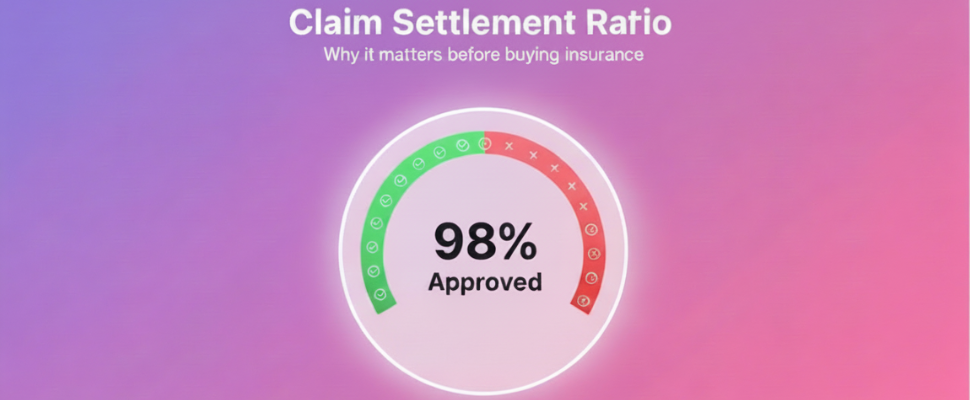
The claim settlement ratio is a key number. This ratio shows how many claims an insurer pays out against the total claims they receive. IRDAI publishes this information each year for all Indian companies. It generally helps you see if an insurer is reliable.
This guide will clearly explain the claim settlement ratio. You will learn its meaning and why it is important for your insurance policy. We show how to understand these numbers. This helps you pick suitable term life insurance for your family’s financial security.
Key Takeaways
- The claim settlement ratio is a key indicator, reflecting how many claims an insurer successfully pays out, a figure that IRDAI reports annually.
- It specifically measures claims paid against the total number of claims an insurer receives.
- Typically, an insurance claim settlement ratio above 98% is considered very strong, demonstrating a high level of dependability.
- For policyholders, it’s advisable to prioritize an insurer with a consistent, high claim settlement ratio over several years, as this performance history truly highlights their reliability.
- A robust ratio significantly contributes to the peace of mind that your family's claim will be settled smoothly and efficiently should the need arise.
- When evaluating your options, the term plan claim settlement ratio holds particular importance and should always be considered alongside the policy's features and overall coverage.
What's the claim settlement ratio (CSR)?
The claim settlement ratio tells you how many insurance claims a company paid out. It compares paid claims to all claims the insurer received in a financial year. This ratio shows how much you can trust an insurer and how reliable they are. The IRDAI publishes this data for all Indian companies each year.
A higher insurance claim settlement ratio usually means your claim has a better chance of being paid. For term plans, the term plan claim settlement ratio is a very important thing to consider.
How to calculate the life insurance claim settlement ratio?:
To calculate claim settlement ratio, use this CSR formula:
CSR (%) = (Claims Settled / Total Claims Received) x 100
Imagine an insurer gets 1,000 total claims. If it settles 990 claims, its claim settlement ratio is 99%. This figure covers all life insurance claims. The IRDAI shares this data every year. It shows claims settled from April 1 to March 31.
Why does the term insurance claim settlement ratio matter?
Your main goal for buying term insurance is to keep your family financially secure. This plan ensures your family gets money if you pass away while the policy is active. Understanding the importance of CSR helps you choose an insurer that will fulfill this promise. The claim settlement ratio often shows how much an insurance company values its customers.
Keeps Your Family's Money Safe
A high claim settlement ratio usually builds trust. It suggests the company will likely pay valid claims quickly. When you pick a term plan, you want a firm promise. You expect your family to receive the agreed amount of money. A strong CSR means the company works well. It also confirms their commitment to your family's financial safety.
Shows How Trustworthy the Company Is
A low claim settlement ratio can point to issues. It might suggest problems with how claims are handled. This could also mean the company is not very stable financially. It is wise to look closely at the company's reliability. Checking their complaint process and Solvency ratio can give a clearer picture. A CSR that stays low is a warning sign for anyone looking to buy a policy.
The ratio shows if an insurer is reliable
A high claim settlement ratio often shows a strong promise from an insurer. This means they usually handle claims well. Companies with low or changing ratios may not pay claims as reliably.
- Long-Term Trend: Look carefully at the insurer's claim settlement history.
- Always understand your policy terms before you make a claim.
This helps you see how reliable an insurer is. It also shows their commitment to paying claims.
Confused between health insurance plans?
Let AI decide for you.
- AI compares 30+ insurers
- No sales pressure
- Result in 60 seconds
- 100% free
No spam. No calls unless you want them.
It gives your family peace of mind
A high claim settlement ratio shows an insurance company pays claims well. This means they are quick and fair. It is very important when you pick a health plan in India. This ratio helps ensure your family gets money for medical needs quickly. It makes hospital bills easier to manage.
Each year, the IRDAI shares these ratios for all Indian companies. A good ratio, often over 95%, means the insurer cares about its customers. It also means their claim process is usually simple. This is key during tough health times.
- Your family's claims typically get reviewed and approved faster.
- It offers more certainty that your medical expenses will be paid.
- The insurer shows itself to be trustworthy to policyholders.
- Reduces stress for families when health problems arise.
Best For: Lowering family worry about getting claims approved and paid.
It shows financial health
The claim settlement ratio is a key thing to check for health insurance. This number tells you how many claims an insurance company paid. It compares paid claims to all claims it received in one year. For example, a 98% ratio means the company approved 98 out of 100 claims.
A higher ratio typically shows good insurance company performance. It suggests the insurer acts quickly and is reliable with claims.
The IRDAI asks all Indian insurers to share this number each year. Customers can often trust companies with better ratios more easily. Insurers such as Star Health and Niva Bupa often report strong ratios.
- An insurer’s quickness in paying valid claims is clear here.
- This number indicates the company's financial strength.
- Processing claims becomes more open for everyone to see.
- It lets you judge how dependable an insurer is over time.
Best For: Seeing how trustworthy and fast an insurer is at settling claims.
What counts as a good term life insurance claim settlement ratio?
A good claim settlement ratio for term life insurance typically starts at 95% in India.
• Aim for above 98%. This is a solid benchmark in the Indian market. It signals that an insurer pays most claims reliably.
• Companies with a claim settlement ratio over 95% often seem trustworthy. The best firms usually keep their ratio above 98%.
• Customers should be careful about insurers reporting below 90%. This low figure could mean they reject more claims.
• A high CSR must stay steady. Look for companies that show a strong ratio for at least three to five years.
The latest IRDAI claim settlement ratios for 2026 (FY 2024 to 2025 data):
The IRDAI recently shared its IRDAI data 2026. This data is for the 2024-25 year. This report clearly shows how insurance companies handle claims. For individual death claims, the average across all companies was 98.45% during this time. This number truly helps people compare different insurance companies.
It is a good idea to check the latest CSR before choosing an insurance company. Here are some top insurance companies. They show their life insurance claim settlement ratio for the 2024-25 year:
• Max Life Insurance reported 99.60%.
• HDFC Life Insurance: Reached 99.45%.
• SBI Life Insurance paid 99.40% of claims.
• Bajaj Allianz Life Insurance had a ratio of 99.20%.
• ICICI Prudential Life Insurance: Showed 99.15%.
These numbers often show how committed an insurance company is. Companies with a claim settlement ratio above 99% usually handle claims well. This includes both claims where you get paid back and cashless options. Customers should check these details carefully.
What affects an insurer's claim settlement ratio?
The claim settlement ratio shows how well an insurer performs. Many things affect this number. It is not just about if an insurer wants to pay. Knowing these points helps policyholders avoid common reasons for claims being turned down.
Claims are often denied because of missing or wrong documents. Policyholders must send all needed paperwork correctly. Any delay or mistake in sending it can lead to a denied claim. This usually lowers how many claims an insurer pays.
Not sharing information is a main reason for claims being refused. This happens when people applying do not share important health facts. Hiding health problems you already have or past treatments can cause a claim denial. Insurers need full honesty when they give out policies.
Confused between health insurance plans?
Let AI decide for you.
- AI compares 30+ insurers
- No sales pressure
- Result in 60 seconds
- 100% free
No spam. No calls unless you want them.
Also, a policy stopping is a common problem. Your policy stops working if you miss payments. A stopped policy gives you no coverage at all. Insurers will not pay any claims made under such a policy.
Insurance policies also have specific things they do not cover. These are conditions or treatments the policy will not pay for. Claims for these things will be denied. Waiting times also apply to some illnesses or procedures. Insurers will not pay claims filed during these set times.
Finally, insurers carefully check claims that seem suspicious. They will reject a claim if there is proof of insurance fraud. This protects the insurer and other policyholders from false claims.
Failing to share material facts
When you apply for insurance, always share your real health and lifestyle facts. Indian insurance companies use these details to understand your risk. This helps them set a fair price for your policy. Hiding health problems you already have, like diabetes or high blood pressure, can lead to big issues later.
The IRDAI states you must tell them everything. If you do not disclose important facts, your claim might be denied. This includes past heart disease or if you smoke often. Not telling the truth also affects the insurer's claim settlement ratio. It can leave you without money during a medical emergency. Always confirm that all details on your application form are true and complete.
- You must state all current medical issues and daily habits.
- This information helps insurers decide your policy's cost and rules.
- Not sharing full facts often leads to claims being rejected later.
- The IRDAI stresses that all applicants must be honest.
Best For: Individuals who truly grasp the importance of being completely honest when buying insurance.
When a policy lapses because you didn't pay:
If you miss premium payments, your policy stops working. If this happens, insurers do not have to pay any claims. This situation directly affects the insurer's claim settlement ratio. Always set up auto-debit or payment reminders.
- Make sure you keep your coverage going for financial safety.
- An insurer might reject a policy if you do not pay premiums.
- Keep your policy active without trouble.
Best For: Stopping the loss of insurance benefits because of missed payments.
Mistakes in your paperwork or personal details
Wrong details on your proposal form or nominee papers can delay claims. Errors may even lead to your claim being rejected. This impacts the claim settlement ratio. Always ensure all paperwork is correct.
• Review all personal details on the proposal form carefully.
• Make certain your nominee's information is accurate.
• Turn in claim documents that are full and correct.
Best For: Preventing claim delays from paperwork errors.
Claims filed during the exclusion period:
Insurance plans often have specific waiting times. Insurers usually do not pay claims during these times. For example, most policies do not cover suicide in the first year. This affects how many claims the insurer pays. Always read your policy document carefully.
• Know your plan's first waiting times.
• Understand what your policy does not cover, like existing health problems.
• Stop your claim from being turned down because of policy rules.
Best For: Knowing policy limits to stop claim problems.
Find your best term plan with Cover Tiger's AI tool
Picking the right term plan takes thought. It balances a good claim settlement ratio with your personal needs. You need enough coverage. An affordable premium matters too. Look at the special parts of the policy. This big choice can feel hard.
Cover Tiger helps with this tough decision. Our smart AI insurance tool makes choosing a plan simple. It looks at your details and budget carefully. Then it gives you advice just for you. This helps you find the best term plan fast.
Make your final choice with full trust. Visit Cover Tiger today. Get quotes made for you. Compare choices from the best insurance companies. Use our platform to buy term insurance that truly protects your family's money future.
Confused between health insurance plans?
Let AI decide for you.
- AI compares 30+ insurers
- No sales pressure
- Result in 60 seconds
- 100% free
No spam. No calls unless you want them.
Conclusion
The claim settlement ratio shows how much you can trust a term insurance company. A high and steady ratio, usually above 98%, proves the company is reliable.
First, look at this claim settlement information. But always think about the full policy coverage, how much it costs, and other features. Make a good choice for your family's future. Use a comparison platform to help you choose well.
A good claim settlement ratio is typically over 95%. Each year, the IRDAI shares this for all insurers. If your health claim gets rejected, first learn why. Then, contact the company's complaint system. You can also reach out to the IRDAI Grievance Cell for help. Always check current ratios on IRDAI reports or insurer websites.
Frequently Asked Questions
Q: Can a term insurance claim be rejected after 3 years?
Yes, a term insurance claim can be rejected even after three years, but only under specific circumstances. Under IRDAI regulations, Section 45 states that after three years, the policy
typically becomes incontestable. This means the insurer won't reject it for misrepresentation or non-disclosure (unless clear, deliberate fraud is proven). So, it's highly unlikely unless there's concrete evidence of intentional fraud from the start.
Q: What documents are typically required for claim settlement?
A duly filled claim form, photo ID, and address proof are always needed. For medical claims, you'll typically submit the discharge summary, original hospital bills, and diagnostic reports. Accident claims usually require an FIR or MLC (this can vary), but checking your policy document is always the best way to confirm everything with your insurer.
Q: What is the time limit for claim settlement?
For cashless claims, your insurer typically processes approvals within a few hours. Reimbursement claims, as per IRDAI guidelines, should be settled within 30 days of receiving all documents. If an investigation is required, it's completed within 30 days, with the claim settled within 45 days from the last document (this timeframe is regulated).
Q: What is the difference between claim settlement ratio and amount settlement ratio?
Claim Settlement Ratio (CSR) measures the number of claims settled compared to those received. Amount Settlement Ratio (ASR), though, looks at the total value paid out versus the total claimed amount. You'll want to review both; a high CSR doesn't always guarantee that large claims were fully paid (check IRDAI reports), so ASR often gives a truer financial picture.
Q: If an insurer's CSR is low, does it mean my claim will definitely be rejected?
No, a low CSR doesn't mean your claim will definitely be rejected. It typically reflects an insurer's overall efficiency, but your specific claim's approval hinges on meeting your policy's terms and providing complete documentation (this can vary by insurer). So, understanding your plan's details is key.
Q: How often does the IRDAI update the claim settlement ratio data?
The IRDAI updates claim settlement ratio data annually. You'll typically find this information released after the financial year closes, usually presented within their annual report (do check the IRDAI website for the precise publication). This provides a clear picture of an insurer's performance.
Q: Is a 100% claim settlement ratio a realistic expectation?
No, a 100% claim settlement ratio isn't a realistic expectation for any Indian insurer. Even the best companies, approved by IRDAI, will deny some claims for valid reasons (like non-disclosure of facts or if it's outside policy terms). Typically, anything above 95% is considered very good, showing you a reliable insurer. Your complete transparency at application helps ensure smooth processing later on.
Q: Does the claim settlement ratio include claims settled for riders, like critical illness?
No, the Claim Settlement Ratio (CSR) typically focuses on core policy claims like death or health hospitalizations. Rider claims, say for critical illness, are settled under their specific terms. While these do contribute to the insurer's overall payouts, it's not always explicitly reflected in that main CSR figure (do confirm with your specific plan). You'll want to check product disclosures.

Written By
Raj Shankar
Principal Officer and General Manager at CoverTiger
With over 7 years of experience in the insurance and fintech industry, Raj Shankar has helped 10,000+ customers secure their families with the right insurance solutions. He has worked with leading brands such as Policybazaar, INDmoney, and CoverTiger, building strong expertise in health insurance, life insurance, sales leadership, and customer advisory. His mission is to make insurance simpler, more transparent, and accessible for every Indian family.