When picking health insurance, you will see many terms. The incurred claim ratio (ICR) is a very important number. It helps you check an insurance company's financial health. This ratio also shows how well the company typically pays claims.
Understanding the incurred claim ratio is key. It helps you see how insurance companies handle their money. This number about their money health is important for customers. It helps you find out how dependable an Indian insurance company is.
This guide will fully explain what ICR means. We will show you how to read this important ratio. Learning about the incurred claim ratio helps you make a smarter choice for your health insurance.
What is the incurred claim ratio (ICR)?
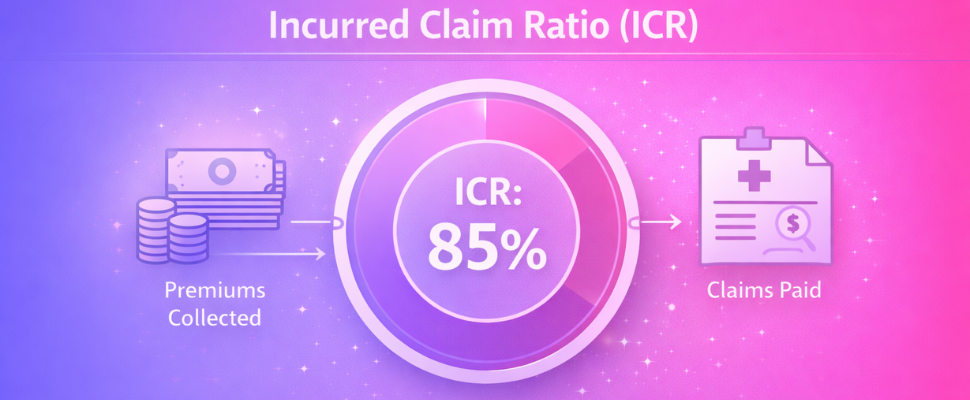
The Incurred Claim Ratio (ICR) tells you how much money an insurance company pays for claims. It compares this to the money the company gets from premiums. For health insurance, the ICR is a very important number. It shows the percentage of claims an insurer paid. This percentage is measured against all the premium money collected. This happens within one financial year.
This ratio often shows an insurance company's financial strength. It also shows its ability to pay claims on time. Knowing what the incurred claim ratio means truly helps people who have policies.
For example, imagine an insurer gets 100 in premiums. An Incurred Claim Ratio of 85% means the insurer paid 85 for claims. This happens for every 100 it earned. The leftover 15 covers the insurer's daily costs. It also includes payments for agents and company profit. This incurred claim ratio in health insurance helps us understand how health insurance plans generally work.
How is the incurred claim ratio calculated?
Insurers use a specific formula to calculate the incurred claim ratio. This ICR formula shows how much of the premiums collected go towards claims.
ICR = (Total Value of Claims Paid / Total Value of Premiums Collected) x 100.
For instance, an insurer collects 500 Crores in premiums. It pays 425 Crores for claims. To calculate ICR: (425 Crores / 500 Crores) x 100 = 85%. This 85% is the incurred claim ratio. Such data typically highlights an insurer's financial health. The IRDAI officially publishes these ratios each year. This lets policyholders easily check important details.
What is a good incurred claim ratio?:
Confused between health insurance plans?
Let AI decide for you.
- AI compares 30+ insurers
- No sales pressure
- Result in 60 seconds
- 100% free
No spam. No calls unless you want them.
A good incurred claim ratio isn't just the highest number. An insurer actually needs an ideal range for it. This ideal ICR shows a good balance. The insurer pays valid claims fairly. It also manages its business well. This balance means strong underwriting. Policyholders then feel sure about
their claims.
ICR Between 50% and 70%
When the incurred claim ratio is low, say in this range, it often means the claims process is very strict. This might increase the number of denied claims. While it could show strong underwriting, policyholders might find it harder to get claims approved. This range is usually not preferred.
ICR Between 70% and 90%
This is considered an ideal ICR range. Here, insurers typically pay most valid claims. They also keep good financial stability. This balance is very important. Many top Indian companies offering the best health insurance plans fall into this range. It shows good claim settlement practices.
ICR Above 90%
A high ICR, especially above 95%, means the insurer pays out nearly all money received from premiums as claims. This might not last long. It could lead to financial stress. Such an insurer might struggle over time.
Incurred claim ratio vs claim settlement ratio in health insurance:
The incurred claim ratio and claim settlement ratio are very important numbers. They help you understand how reliable an insurer is. The claim settlement ratio (CSR) tells you how many claims a company settles. This is out of all the claims it gets. A high CSR often means the insurer handles claims well.
The incurred claim ratio (ICR) focuses on money. It compares the total money paid for claims against the total premiums collected. This number shows the insurer's financial strength. While
CSR measures settled claims, ICR measures the actual money paid out.
For a full picture of an insurer's performance, consider both. A good CSR is vital. It should typically go with a healthy ICR. This combined view helps you pick a strong insurance company. Knowing about ICR vs CSR guides your choice. Remember, these are separate numbers; some people wrongly call them a single "incurred claim settlement ratio".
Confused between health insurance plans?
Let AI decide for you.
- AI compares 30+ insurers
- No sales pressure
- Result in 60 seconds
- 100% free
No spam. No calls unless you want them.
Factors to consider when choosing a health insurer beyond incurred claim ratio:
The incurred claim ratio offers a good start. Still, it is not the only factor when choosing health insurance. Looking at several key points helps you make a sound decision.
Claim Settlement Ratio (CSR) This number tells you how many claims an insurer pays out of all claims it receives. A higher CSR typically shows the company is reliable.
Network Hospitals and Policy Features Check the number of good network hospitals linked with the insurer. These hospitals allow cashless treatment, which is often very helpful.
Customer Service and Premiums Good customer service makes processing claims much easier. Read reviews to understand how well the insurer supports its customers.
Find the right health insurance plan with Cover Tiger:
To choose good health insurance, look beyond just the incurred claim ratio. Cover Tiger AI helps you grasp all key factors. Our platform makes it simple to compare plans from various companies. We use AI to personalize options for you. This helps you find health insurance that truly fits your needs. Make confident choices without any sales pressure. Visit Cover Tiger today to get your best health insurance plan.
Conclusion
The incurred claim ratio is an important number. It tells you about an insurer's financial strength. It also shows how well they pay claims. A good incurred claim ratio typically falls between 50% and 80%.
However, do not look only at this one figure. Also check their Claim Settlement Ratio and network hospitals. Consider the policy benefits too. Getting a full view helps you make a smart decision.
Understanding these details ensures you choose your health insurance well. This helps you pick a trusted partner for your healthcare needs.
Frequently Asked Questions
Confused between health insurance plans?
Let AI decide for you.
- AI compares 30+ insurers
- No sales pressure
- Result in 60 seconds
- 100% free
No spam. No calls unless you want them.
What is the difference between incurred claims and paid claims?
Paid claims are the actual amounts your insurer has already disbursed to policyholders. Incurred claims represent the total value of all claims that arose during a period, including those paid, those still being processed, and estimated future claims (this can vary). An insurer typically uses incurred claims to assess its overall financial liability. It's a key figure for IRDAI's regulatory reviews.
Can an insurer's ICR change significantly from year to year?
An insurer's ICR certainly can change significantly year-on-year. Typically, large-scale events, say a natural calamity or a sudden surge in high-value claims (like a new pandemic), really impact these numbers. IRDAI closely monitors this ratio for solvency, but it's a dynamic figure that reflects the claims paid out.
How often is the Incurred Claim Ratio data updated by IRDAI?
IRDAI updates the Incurred Claim Ratio data annually. You'll typically find it on their official website, published with the annual reports for the entire Indian market (usually by September). This reflects each insurer's performance from the preceding financial year.
Does the ICR of a health insurance company affect the premium I will pay in the future?
Yes, it can certainly influence future premiums, though often indirectly. A health insurer with a high Incurred Claim Ratio (ICR) is paying out a significant portion of what they collect. If this trend continues, to maintain financial solvency (a requirement by IRDAI), they'll typically need to propose premium adjustments. This means it's possible your renewal premium could see an increase.
Should I completely avoid an insurance company that has a low Incurred Claim Ratio?
A low Incurred Claim Ratio doesn't mean you should completely avoid an insurer. It typically indicates they're a newer company or have very strict underwriting, not necessarily poor service. You'll want to prioritize their Claim Settlement Ratio (CSR) and customer reviews, especially for health plans (check their hospital network). Those factors give a much better picture of reliability.

Written By
Raj Shankar
Principal Officer and General Manager at CoverTiger
With over 7 years of experience in the insurance and fintech industry, Raj Shankar has helped 10,000+ customers secure their families with the right insurance solutions. He has worked with leading brands such as Policybazaar, INDmoney, and CoverTiger, building strong expertise in health insurance, life insurance, sales leadership, and customer advisory. His mission is to make insurance simpler, more transparent, and accessible for every Indian family.