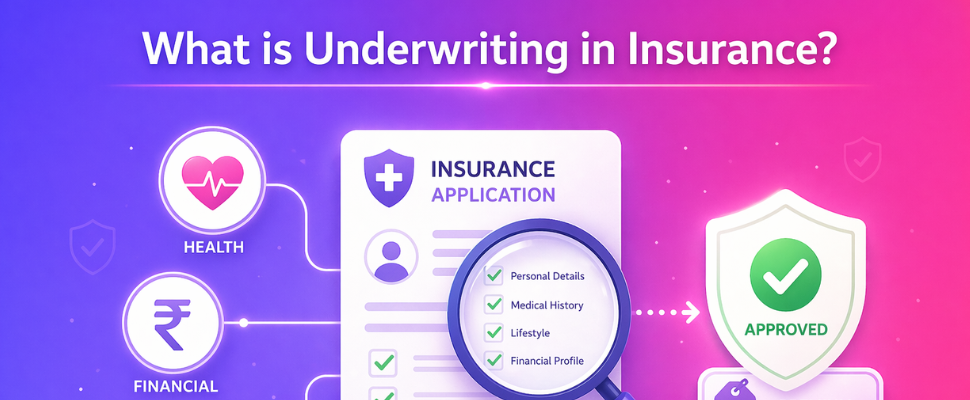
Applying for insurance involves several steps. One important step is underwriting in insurance. Many people do not fully understand this process.
Typically, it is a basic risk check done by insurers. This happens behind the scenes after you send in your request. The check helps insurers learn about your risk level.
Understanding underwriting is key for anyone with a policy. This guide will explain what underwriting is and how it works. You will learn what insurers look at. We also show why this step ensures fair prices and correct policy writing.
What is underwriting in insurance?
An insurance company checks the risk of covering a person or property. This is underwriting in simple terms. The definition of underwriting in insurance is an important process. It helps an insurer decide if they should take on a risk. It also sets a fair price for the insurance plan.
The main purpose of underwriting is to keep the insurance company financially strong. Underwriters do this key job. They typically use facts, rules, and special computer tools.
For health plans, medical underwriting is a key step. The medical underwriting meaning refers to checking your past health. This often includes any existing health issues (PEDs). These checks are a core part of underwriting in insurance. They fall under different types of underwriting in insurance.
How does the insurance underwriting process work?
Insurance underwriting starts when you submit your application. This process has several key stages. An underwriter reviews your details carefully. They assess potential risks. For health policies, this includes your health declaration form. They identify pre-existing diseases (PED). This step is crucial for understanding medical underwriting meaning.
Different types of underwriting in insurance apply to various policies. Health policies need different checks than motor insurance, for instance. Specific steps can change based on the policy type. However, the main process stays similar. The underwriter’s job is to decide if the insurer can offer coverage. They also set the right premium price. Finally, a decision is made. The insurer might
accept, reject, or offer different terms.
Step 1: reviewing the application
When your application reaches the insurer, the first step in insurance underwriting begins. An underwriter has a key job here. They carefully check all the forms you have sent. This makes sure every detail is complete and correct. Any missing information or mistakes can often slow down the process.
• All needed papers must be correctly attached.
• The underwriter looks for matching personal and health information.
• The underwriter notes any details that are not clear.
Best For: Getting your policy review off to a quick, smooth start.
Step 2: risk assessment and analysis
Underwriting in insurance is a key step. An underwriter carefully checks your risk profile. They use company rules and old claim data. This helps them see the chance of a future claim.
• Medical records and health reports get a full review.
• Insurers look at financial papers for large sum plans.
• Past Claims: Your history of earlier claims is checked for patterns.
This process helps decide fair premiums and policy terms for everyone.
Step 3: The underwriting decision
The underwriter makes a final decision in the last step of insurance underwriting. They carefully review all your details. This choice decides if your policy gets approved. It also sets the exact rules and how much the premium will cost. A later section explains what can happen next.
• You get final approval, or they reject your policy application.
• The insurer sets the correct premium amount based on any risk factors.
• The insurer puts specific conditions or exclusions in place for your coverage.
Best For: Getting your insurance policy accepted and confirming all terms.
The core types of underwriting in insurance
Confused between health insurance plans?
Let AI decide for you.
- AI compares 30+ insurers
- No sales pressure
- Result in 60 seconds
- 100% free
No spam. No calls unless you want them.
Underwriting in insurance has many steps. It means carefully checking your policy application. Underwriters look at various risks. This often depends on the insurance type, like health or term life.
What are the different types of underwriting? The review changes for each policy you seek. A health insurance application needs a different check than a life policy.
What factors do underwriters consider? They typically review details from your proposal form. This includes lifestyle points, such as smoking habits. For bigger cover amounts, they may also do financial checks.
Medical underwriting
Medical underwriting is key for health and life insurance. It checks how healthy a person is. This helps us guess future costs or death risk. It's a main part of insurance underwriting.
• We review your age and past health records.
• Any existing health issues like diabetes are checked carefully.
• Your family's medical past can show shared risks.
• Your height and weight ratio affects your overall health view.
• Lab test results give current health details.
Best For: Checking health risks when getting a new policy.
Financial underwriting
Financial underwriting checks how good an applicant's money situation is. This step makes sure the insurance coverage asked for is fair. It also confirms the person can afford to pay for their premiums. This process is truly key to underwriting in insurance.
• Your current earnings often show if you can pay for premiums.
• Net worth helps reveal your overall financial strength.
• How someone managed credit before gives clues about their money habits.
• Checking your existing insurance helps avoid buying too much cover.
Best For: Policies where the total amount insured connects directly to your income or what you own.
Lifestyle and occupational underwriting
In most cases, an insurer looks at your daily habits. This assessment also checks job risks. Such factors often change how long someone may live or their injury chances. This is a key part of underwriting in insurance.
• Smoking directly impacts your health risks.
Confused between health insurance plans?
Let AI decide for you.
- AI compares 30+ insurers
- No sales pressure
- Result in 60 seconds
- 100% free
No spam. No calls unless you want them.
• The amount of alcohol consumed can show future health issues.
• Risky hobbies like scuba diving clearly raise injury chances.
• Job dangers: Certain roles have specific workplace risks.
Best For: Individuals with particular lifestyle choices or dangerous jobs.
Why is Underwriting Important for a Fair Insurance System?:
Underwriting is key for a fair and steady insurance system. What does insurance underwriting do? It keeps both the company and its customers safe.
• Making Things Fair: Underwriting helps premiums match each person's actual risk. This is called risk-based pricing. Healthy people usually pay less. People with higher risks pay more. This explains, "How does underwriting affect premiums?"
• Without careful underwriting in insurance, only high-risk people might buy plans. This situation, known as adverse selection, would make insurance too costly for everyone else.
• Financial Strength: Why is underwriting important in insurance? It helps the company stay strong with money. Checking risks carefully makes sure enough premiums are collected. This lets them pay out claims to customers.
Common Factors That Affect Underwriting
- ### Age -
Age is one of the most important things that affect underwriting. Life or health insurance may cost more for older applicants.
- ### History of Medical Care
Your health problems can change your premium, waiting period, or exclusions
- ### Occupation
Jobs that are dangerous may affect the cost of life or accident insurance.
- ### Lifestyle Habits
Risk can go up if you smoke, drink too much, or do dangerous hobbies.
- ### History of Claims
A lot of past claims could affect whether or not you are approved or how much you have to pay.
- ### Amount of Coverage
Confused between health insurance plans?
Let AI decide for you.
- AI compares 30+ insurers
- No sales pressure
- Result in 60 seconds
- 100% free
No spam. No calls unless you want them.
Requests for more coverage may need more thorough checks of finances or health.
Conclusion
Underwriting is a key part of insurance. It helps manage risk for both companies and customers. This process makes sure your premiums are fair. Insurers often check your medical history and pre-existing diseases (PED).
Knowing about this step helps you apply for insurance. You can then buy a policy with more confidence. This helps keep the Indian insurance market strong for everyone.
Frequently Asked Questions
Q: What are the 4 C's of underwriting?
The 4 C's are Character, Capacity, Capital, and Conditions. These are basic factors Indian insurers use to evaluate an applicant's risk for a policy. Character looks at your honesty and past claims history; it's quite important. Capacity assesses your ability to pay premiums, while Capital refers to your overall financial strength (this typically includes assets). Finally, Conditions cover specific risk factors like your health or occupation, depending on the plan.
Q: What's the difference between underwriting and insurance?
Insurance is the financial protection product you buy from us, covering specified risks like health or life, as per IRDAI guidelines. Underwriting, conversely, is the insurer's internal process where they assess your risk profile (your health, occupation, etc.) before offering you that policy. It's how they decide if they'll even provide coverage and determine your premium, typically.
Q: What is the role of a medical underwriter?
A medical underwriter assesses your health status to decide if you qualify for insurance coverage. They carefully review medical reports and declarations (from your Indian doctors, of course) to
understand any potential risks. This process ensures your premium, waiting periods, or any special conditions, are fairly set according to IRDAI guidelines; it's quite important.
Q: How long does the insurance underwriting process typically take?
Underwriting typically takes 2-3 business days for straightforward applications. If medical tests are needed, it could easily extend to a week or more (depending on clinic slots and report turnaround). For complex health declarations, it's not unusual for an Indian insurer to take a little longer for a thorough assessment.
Q: What happens if I forget to mention a medical condition on my application?
Forgetting to mention a medical condition could lead to your claims being denied or even policy cancellation by the insurer. It's considered non-disclosure of a material fact. Typically, insurers won't honor claims related to undeclared pre-existing conditions (as per IRDAI rules). Always inform your insurer immediately if you recall anything you missed.
Q: Can my insurance application be approved if I have a pre-existing condition?
Insurance applications can certainly be approved even with a pre-existing condition. Most Indian insurers (as per IRDAI guidelines) will impose a waiting period, typically 2 to 4 years, before you're covered for that specific issue. It's really important to disclose everything upfront, so your claims won't face any issues later on.
Q: Why would an insurer charge a higher premium after underwriting?
Insurers charge a higher premium post-underwriting when the risk assessment reveals a greater likelihood of claims. This typically happens for pre-existing conditions like diabetes or hypertension, quite common in India, or if an applicant's age is higher. The increased premium simply compensates the insurer for that elevated risk profile (this is standard practice). It's how they ensure financial stability for future payouts.
Q: What are my options if my insurance application is rejected?
Understand the specific reason for rejection directly from the insurer first; it's crucial for your next move. Often, you can reapply after addressing those concerns, or explore policies from other IRDAI-regulated companies whose underwriting criteria differ (this varies significantly). Also, consider group insurance schemes, which typically have more relaxed eligibility requirements.

Written By
Raj Shankar
Principal Officer and General Manager at CoverTiger
With over 7 years of experience in the insurance and fintech industry, Raj Shankar has helped 10,000+ customers secure their families with the right insurance solutions. He has worked with leading brands such as Policybazaar, INDmoney, and CoverTiger, building strong expertise in health insurance, life insurance, sales leadership, and customer advisory. His mission is to make insurance simpler, more transparent, and accessible for every Indian family.