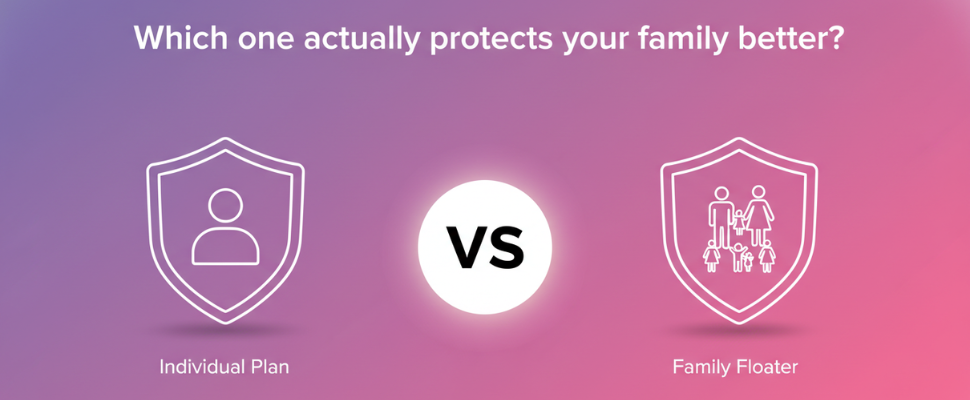
Medical costs in India often rise fast. An unexpected health problem can create big money worries. Good health insurance helps protect your savings. It gives you vital medical coverage when needed most.
Many people face a key choice for a health plan. They typically consider family floater vs individual health insurance. This guide will explain how these plans differ. Understanding this helps you pick smartly for your family.
What is an individual health insurance plan?
An individual health insurance plan covers only one person. Each person who is insured gets their own coverage. This means no one shares their claim limit. If one person uses their plan, it usually does not lower coverage for others. This is true even if other family members also have individual
health insurance. This shows a key difference between a floater policy and an individual policy.
A floater policy shares one sum of money for all family members. However, an individual plan gives protection for just one person. It provides coverage for a single person. This plan does not share its sum of money with anyone else. Knowing this helps you understand the difference between individual and floater plans. This is an important point for discussing family floater vs individual health insurance.
What is a family floater health insurance plan?
A family floater health insurance plan is a single policy. It covers several family members. This often includes the person who bought the policy, their spouse, and children. Some plans may also cover parents. All family members typically share one total sum of money insured. We call this a floater basis.
For instance, a family might have a shared sum insured of Rs. 15 lakh. Any member can use this amount. However, if one person makes a large claim, it reduces the money remaining for others. This holds true for that policy year. This type of family floater health insurance generally suits young, healthy families well. They usually face a low risk of many large claims. You should understand this shared money model when comparing family floater vs individual health insurance.
Key difference between family floater and individual Mediclaim
Choosing between a family floater and an individual health insurance plan depends on what your family needs. These plans mostly differ in how they handle coverage, payments, and claims. Knowing these facts helps you make a good choice. It also helps protect your family's money.
Here are the main differences to think about:
• Coverage: An individual plan covers just one person. This person gets their own sum insured. A family floater policy protects many family members. All members share one total sum insured.
• Sum Insured: With an individual policy, each person gets their own sum insured. For a floater plan, all family members share one sum insured.
• Premium: Individual plans usually have separate payments for each person. Family floater plans often ask for one payment for the whole family. This single payment is usually less than buying many individual plans.
• Claim Impact: A claim made on an individual policy does not affect others. When one family member makes a claim on a floater policy, it lowers the shared sum insured for everyone else.
Understanding Sum Insured Use The sum insured is very important. In an individual plan, if someone uses Rs. 5 lakh for hospital care, their Rs. 10 lakh sum insured becomes Rs. 5 lakh. Other family members' full sum insured stays untouched.
Impact on Payments Payments for family floaters are often cheaper for families. This is especially true for younger families without many health issues. For example, a family of four might pay less for one floater policy. This is usually cheaper than buying four separate individual plans.
How is the Sum insured Allocated?
When you compare family floater and individual health insurance, the money you can claim works differently. An individual plan gives each person their own amount of money for claims. No one else can use this. However, a family floater plan shares one total amount of money for all family members. Any claim then reduces the overall money available for everyone.
• Individual Plan: Each person gets their own separate money for health costs.
• The floater plan uses one shared pool of money for the whole family.
Best For: Understanding how your claim money is managed.
Confused between health insurance plans?
Let AI decide for you.
- AI compares 30+ insurers
- No sales pressure
- Result in 60 seconds
- 100% free
No spam. No calls unless you want them.
How are premiums calculated?
The cost of insurance is different for family floater and individual health plans. For individual plans, the cost depends on your age, health, and chosen coverage. A family floater plan usually sets its price based on the oldest family member's age. This covers everyone.
• Individual Plan: Your health and age are the only things that decide the cost.
• For a floater plan, the price is based on the oldest person's age in the family.
Why This Matters: It helps you understand what makes insurance costs different.
Benefits of Individual Health Insurance Plan
Choosing individual health insurance plans offers special benefits for each person in your family. This is very important when you compare family floater plans with individual health insurance. Knowing the good things about individual health insurance helps you make a smart choice.
• Personalized Coverage: Each family member gets a plan made just for their unique needs. This makes sure they receive coverage that fits their age and current health.
• Each person covered gets their own sum insured. So, if one family member makes a claim, it usually will not lower the money for another.
• Tax Benefits: The money you spend on these plans can give you tax benefits. You can claim tax deductions under Section 80D of the Income Tax Act.
• Each policy works on its own. This keeps a no-claim bonus safe from another family member's claim.
Getting coverage that is guaranteed and dedicated to you:
Individual health plans set aside all the money for one person. This means that person always has full coverage when they need it. This difference is central to understanding family floater vs individual health insurance.
• The total money insured is only for one person.
• No money is shared with other family members.
• Guaranteed Individual Coverage Benefits
Best For: People who want their very own, sure health protection.
Personalizing your plan to fit your specific health needs:
Individual health insurance plans cover just one person. These plans give specific benefits for that person's exact health needs. This is important when you choose between family floater and individual health insurance. Each person gets their own sum insured. This makes sure they have personal protection.
Your coverage stays safe. It will not change even if other family members make claims on their own policies. You can also add extra coverage for health problems you already have. This gives strong protection for your special needs. For example, someone has a specific health issue. They can easily buy a plan that fits them perfectly.
• The whole sum insured is used only for one person's medical costs.
• Claims from other family members usually do not change your personal cover amount.
• You can add extra protection for serious sicknesses, certain diseases, or even maternity benefits.
• Change your sum insured to fit your personal health risks and needs.
Best For: People who need specific health coverage or have existing health conditions.
Why do these plans work for people with pre-existing conditions?
An individual health plan gives money for one person's health needs. It covers only the person named in the policy. This type of plan often works well for people with existing health issues. Their special needs will not reduce funds for the rest of the family. This also prevents others from paying extra costs. This is a key difference between family floater and individual health insurance. Each person gets their own benefits. If one person claims, it typically does not change another family member's cover. This ensures everyone protected has their own financial safety net.
• Only the plan owner receives the fixed sum for medical care.
• We calculate its cost based on just one person's age and health.
• It can offer specific cover for past health problems after waiting times.
• A claim made here will not impact the no-claim bonus of other family members.
Best For: Individuals with specific health needs or existing medical conditions.
Confused between health insurance plans?
Let AI decide for you.
- AI compares 30+ insurers
- No sales pressure
- Result in 60 seconds
- 100% free
No spam. No calls unless you want them.
Benefits of a family floater health insurance plan
Family floater health plans give special benefits to families. These features often make them a smart choice. Knowing these benefits helps you pick between a family floater plan and individual health insurance.
Here are the key benefits:
- Cost Efficiency: One payment covers many family members. This usually costs less than buying separate plans for everyone.
- The full insured amount is ready for any family member. This gives flexible coverage if one person needs a lot of medical care.
- Single Policy Management: You manage just one plan for the whole family. This makes paperwork, payments, and renewals simpler.
- One insurance amount works like a shared money pool. This gives money help for unexpected medical costs for any family member with coverage.
How to choose between a family floater and an individual plan
You need to think carefully when picking a family floater or individual health insurance. Understanding the differences is key. This guide helps you answer: 'Which is better, a family floater or individual health insurance?' Use these key points to find what fits your family best.
Family Size and Age
• Think about how many people need health coverage.
• Younger families, often with fewer members, usually do well with a family floater plan.
• Larger families or those with older members might need more individual health insurance.
Health Conditions
• Individual plans are often better if one person has a health problem already.
• A floater might not give enough money if one person needs frequent medical care.
• Check each family member's past health status carefully.
Budget for Premiums
• A family floater usually costs less than buying many individual plans.
• Compare the costs of different plans closely before you buy.
• Try to save money, but always make sure everyone has enough coverage.
Sum Insured Needs
• Think about how much medical care each family member might need in a year.
• Make sure there is enough money if people need to use their insurance many times.
• Individual plans give each person their own, often higher, amount of coverage.
Looking at your family's age and health history
Your family's age and past health help you choose insurance. It's important to know the differences between family floater vs individual health insurance. Young families who are healthy often pick a family floater plan. This plan covers all family members together.
Figuring out your budget and coverage needs
To choose between family floater and individual health insurance, think about your money plan. If saving money is your main goal, a family floater often works well. This is true if your family is healthy. But for more protection for each person, individual plans are usually safer.
Find the best health insurance plan with Cover Tiger
Picking the right health plan for your family can be simple with good tools. Cover Tiger helps you compare health insurance plans easily. This smart system offers honest advice. It lets you check features side-by-side, even for health problems you already have.
Cover Tiger assists you in choosing between family floater or individual health insurance. It helps you find the best health insurance plan without any sales pressure. This AI insurance comparison
tool makes your search simple. Visit Cover Tiger today. Compare prices and find a plan that fits your family’s needs and budget.
Confused between health insurance plans?
Let AI decide for you.
- AI compares 30+ insurers
- No sales pressure
- Result in 60 seconds
- 100% free
No spam. No calls unless you want them.
Conclusion
The decision regarding family floater vs individual health insurance is a significant one for many Indian families. No single plan works best for everyone.
Family floater plans often suit young, healthy families. These families look for good value. Individual health insurance plans give strong, dedicated coverage to each family member.
Carefully consider your family's age, health needs, and budget. This helps you make a sound health insurance decision. Use a comparison tool to choose health insurance well. It can help you pick the right plan for your exact needs.
Frequently Asked Questions
Q: Is family health insurance better than individual health insurance?
Family floater plans are typically more economical. Each person in an individual policy gets their own dedicated sum insured, which is important if multiple family members need care simultaneously (this can vary slightly with some Indian insurers). What's better truly depends on your family's health needs and budget, so we'll need to assess that together.
Q: What are the disadvantages of family floater mediclaim policy?
The primary drawback is that the sum insured is shared; if one member has a large claim, it's possible they could deplete the entire cover for everyone else. Also, the premium typically gets calculated based on the eldest member's age, making it potentially costlier for younger families (check your specific quotes). This leaves less security for other family members later in the year if a major illness strikes.
Q: What is the main limitation of a family floater plan?
The main limitation is that all family members share a single sum insured. If one person makes a large claim, it quickly reduces the available cover for the rest of the year. This can leave other family members quite vulnerable, especially if they need hospitalisation later (and Indian medical costs can be high). You'll find it's typically the biggest drawback for many.
Q: Can we convert family floater to individual?
Direct conversion from a family floater to individual policies isn't typically allowed by most Indian insurers. You'd generally need to buy fresh, separate individual health plans for each member. However, you can definitely port the accumulated waiting periods (this can vary by insurer) from your existing floater to these new policies, as per IRDAI guidelines.
Q: Who cannot be covered under a family floater policy?
Your parents, in-laws, or adult siblings generally won't be covered under a family floater policy. This policy is primarily for you, your spouse, and your dependent children. Children who are over 25 or not financially dependent also cannot be included (this age limit varies by insurer). For these individuals, separate individual health plans are typically required.
Q: What happens if one member exhausts the entire sum insured in a floater plan?
The entire family's coverage stops. If one member's medical claims exhaust the floater plan's sum insured, there's nothing left for anyone else for that policy year (this can sometimes vary with specific riders). Typically, all subsequent hospitalisation costs for other family members won't be covered under that same policy.
Q: Is it a good idea to include senior citizens in a family floater plan?
Not really, it's generally better to avoid including them. Their age typically drives up the entire premium (as it's calculated from the oldest member). Also, their more frequent claims can quickly deplete the shared sum insured, leaving younger members underinsured. A dedicated health plan for seniors offers better coverage and potential Section 80D tax benefits.
Q: Can I convert my individual policy to a family floater plan?
You can't directly convert an individual policy into a family floater plan. Typically, you'll need to buy a new family floater policy altogether for your family's coverage. Some Indian insurers might allow you to port benefits like accumulated waiting periods to the new plan (always confirm this with them). It's essentially a fresh buy, not a type conversion of your existing policy.

Written By
Raj Shankar
Principal Officer and General Manager at CoverTiger
With over 7 years of experience in the insurance and fintech industry, Raj Shankar has helped 10,000+ customers secure their families with the right insurance solutions. He has worked with leading brands such as Policybazaar, INDmoney, and CoverTiger, building strong expertise in health insurance, life insurance, sales leadership, and customer advisory. His mission is to make insurance simpler, more transparent, and accessible for every Indian family.