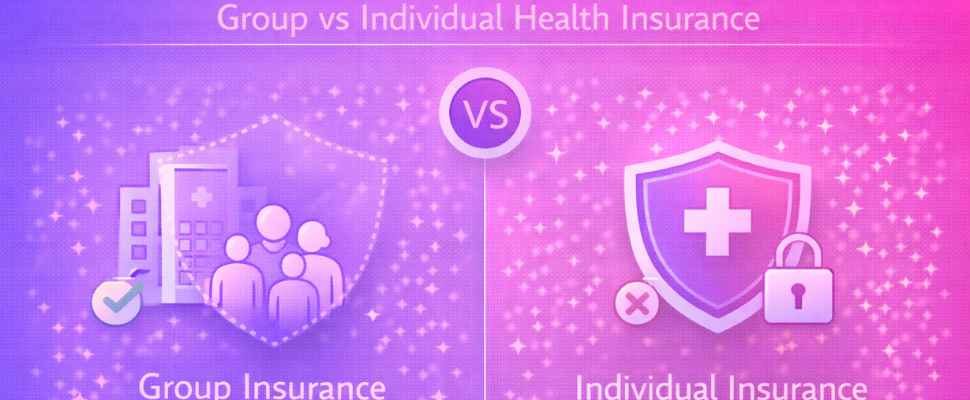
Medical costs for healthcare are rising fast in India. Getting health insurance in India is now a must for everyone. This market could reach $24 billion by 2028. Higher medical prices and new awareness after the pandemic show this need.
People who work a job often have a choice. They ask about group health insurance vs individual policy for employees. While many employers offer coverage, knowing your options is key. This guide looks at group health insurance plans. It also explains an individual health policy. We will cover their differences, what works well, and potential drawbacks. This helps you make a smart health safety choice.
What is group health insurance?:
Group health insurance works like a main policy. An employer or group buys this plan for its workers. This insurance, paid for by the employer, is a key benefit for employees. Usually, the company pays for all or part of the cost. This means employees often pay little or nothing.
Plan details and what it covers often stay the same for a specific employee group. This depends on the insurance company. This full coverage sometimes includes close family members. Employees usually do not need a medical check-up. Also, coverage for health problems they already have often starts right away. There is usually no waiting time.
It helps employees to understand the key differences when considering group health insurance vs individual health plan. This comparison allows them to weigh the benefits of each option. For instance, a group health insurance compared to an individual policy typically offers immediate coverage for pre-existing conditions. This is a notable advantage for many individuals.
What is an individual health insurance policy?
An individual health insurance policy is a direct deal. It forms between you and an insurance company. This plan covers one person's medical bills. The policyholder pays premiums directly to the insurer. This setup is very different from group health insurance plans for employees.
The plan often offers custom coverage. You can select your sum insured, specific add-ons, and benefits. This helps make sure your personal health plan fits your exact needs. An individual health insurance plan is not tied to any employer. It stays active as long as you pay for it. This gives you lifelong renewability. It keeps your health coverage safe for many years.
Many plans also offer a portability option. You can usually get tax benefits under Section 80D for the premiums you pay. Some plans might ask for a medical check-up before you buy them.
Difference Between group health insurance and individual policy
Understanding the key differences in group health insurance vs individual policy for employees is important. This knowledge helps employees secure complete health protection. This comparison outlines the main features of both health insurance plans. It clarifies the benefits and limitations of group health insurance vs individual policy.
There are many ways a group policy differs from an individual policy:
| Parameter | Group Health Insurance | Individual Health Insurance |
|---|---|---|
| Who Buys & Pays | Employer buys and pays for the policy | You buy the policy yourself and pay the premium |
| Flexibility of Coverage | Limited flexibility; same coverage for all employees | Highly flexible; you can choose sum insured and benefits |
| Customization | Not customizable | Fully customizable based on your needs |
| Portability (Can You Keep It?) | Not portable; coverage ends when you leave the job | Portable; continues lifelong even if you change insurer |
| Premium Cost | Lower or sometimes free for employees | Higher; depends on age, health, and coverage |
| Pre-existing Diseases | Usually covered immediately (no waiting period) | Waiting period of 2–4 years applies |
| Medical Check-up | Generally not required | Often required depending on age and coverage |
| No Claim Bonus (NCB) | Not available | Available; increases sum insured over time |
| Tax Benefits | No direct tax benefits for employees | Tax benefits under Section 80D (₹25,000 + ₹50,000 for senior citizen parents) |
The pros and cons of group health insurance
Employer-provided group health insurance is a key part of employee benefits. It often gives quick health protection. But employees should know its good points and its limits. This helps you make smart choices about your health coverage.
Confused between health insurance plans?
Let AI decide for you.
- AI compares 30+ insurers
- No sales pressure
- Result in 60 seconds
- 100% free
No spam. No calls unless you want them.
This part will talk about the good things (pros) about group health insurance. Many employees find these helpful. For example, getting coverage is usually easy. Also, there are often no waiting times before you can make a claim.
Still, there are also some bad points (cons) about group health insurance to think about. These plans usually have limits on how much you can change them. You might also find a limited amount of money you can claim.
Knowing these facts is very important. It helps you compare group health insurance with an individual plan. This clear view helps you check if the group plan fully meets your family's health needs. It also shows any possible gaps in coverage. For example, some rules often apply to who can join. Also, how you make a claim can be different from individual plans.
Key advantages for employees:
Employees get many good benefits from group health insurance. These benefits often look better. Compare group health insurance to an individual plan for employees. Employers usually pay for its cost. So, it's a good choice.
• Low Premiums: Your employer often pays the whole insurance premium. • Pre-existing conditions are usually covered right away. There is no waiting time.
• No Health Checks: You can join this plan without any medical tests.
Best For: Employees who want fast, low-cost insurance with little personal effort.
Key disadvantages to consider:
Group health insurance feels simple to get at first, but it also has some clear limits. When you compare group health insurance vs individual policy for employees, understanding these downsides is important. They can impact your health plans over time.
• Your health cover often stops when you leave the job. This can leave gaps in your protection. • The basic plan might not fully cover your family's unique medical needs. • For big treatments in cities, the covered amount might be too low.
• Employers can change the rules or even stop the policy at any time.
Best For: People who need full, long-term health cover that they can adjust to suit their own changing needs.
Pros and cons of an individual health policy:
Picking your own health plan needs more effort. It often costs more than a plan from your job too. Still, it gives you much control and long-term safety for your health. It is wise to know the pros and cons when you compare group health insurance vs individual policy for employees.
Good Points of an Individual Policy A main individual policy advantage is its custom fit. You pick the total amount covered. You also choose extra features and what the plan will pay for. This helps meet your family's exact needs. This personal health plan stays with you, even if you change jobs. The benefits of individual insurance also mean you can renew it for life. You can even move it to a different Indian company. You can get tax benefits for premiums paid. This comes under Section 80D of the Income Tax Act.
Confused between health insurance plans?
Let AI decide for you.
- AI compares 30+ insurers
- No sales pressure
- Result in 60 seconds
- 100% free
No spam. No calls unless you want them.
Risks of a Personal Health Plan There are some personal health plan risks. Individual policies usually cost more. This happens because the risk is not spread among many people. Most plans also ask for a health check. If you already have health issues, you typically face a waiting period. This wait is often two to four years before the plan covers those problems. This means you must plan your health coverage well in advance.
Why an individual policy offers more security:
An individual policy gives you steady, long-term health protection. You own and control this personal asset. This option has clear advantages. These are especially important when you compare group health insurance to a personal policy for employees.
• You can choose exactly what you need. Pick your sum insured and other benefits. • Your policy always stays with you. This is thanks to lifelong portability.
• You can build a No-Claim Bonus. This gives you future payment discounts.
• You make the rules because you own the policy completely.
Best For: People who want personal, portable, and long-term health security.
Is a group health plan enough, or do you need both?:
A group health plan usually isn't enough for employees. Your company's group plan is a good start. But it often has limits. You should understand how group health insurance is different from a personal plan. This is important for employees.
Healthcare costs are going up in India. The coverage amount from a group plan is often too low. A dual health insurance plan gives you better financial safety. This plan puts your company's plan together with your own personal plan.
You can move your group plan to a personal one when you change jobs. This depends on the insurance company's rules. A separate personal plan makes sure you always have coverage. To add to group insurance, think about a top-up health plan or a super top-up plan. These choices increase your total coverage amount. They give you stronger protection for a lower price.
Conclusion
Understanding group health insurance vs individual policy for employees is crucial. While a group plan often costs less to begin, an individual policy gives you key control. It offers better financial security for your life.
For many, using both plans works best. This means you get a basic individual plan. Your employer's group cover then adds to it. Take charge of your proactive healthcare. Always look at your specific needs. Do not just depend on standard coverage alone.
Use a smart tool like Cover Tiger. Make an informed choice about your health insurance decision with full confidence.
Frequently Asked Questions
Q: Is group health insurance better than individual health insurance?
Confused between health insurance plans?
Let AI decide for you.
- AI compares 30+ insurers
- No sales pressure
- Result in 60 seconds
- 100% free
No spam. No calls unless you want them.
It really depends on your specific situation. Group plans typically offer immediate coverage, even for pre-existing conditions, and are often cheaper (you won't need medicals). An individual policy, though, provides continuity after employment and offers flexibility in sum insured, along with Section 80D benefits. Many clients actually choose both for complete protection.
Q: Is group health insurance mandatory for employees?
No, it isn't legally mandatory for Indian employers to provide group health insurance to their employees. However, most progressive companies offer it as a valuable employee benefit (sometimes even covering immediate family members). While not compulsory, many companies typically find it helps with talent retention and provides crucial financial security against medical costs.
Q: Which insurance is best for employees?
A combination of both employer group health and a personal individual policy is typically best for employees. Your company's group plan offers immediate coverage, often waiving waiting periods (this can vary by insurer). However, that coverage is tied to your job. A personal health plan gives you continuous, portable protection and you'll claim tax benefits under Section 80D.
Q: Can I port my group health insurance policy when I change jobs?
You can't directly port your employer's group health insurance. However, IRDAI regulations permit you to request the same insurer to convert your group coverage into an individual or family floater policy. You'll typically retain continuity benefits for waiting periods (this can vary by insurer), provided you apply within 30 days of leaving the group.
Q: Do group health plans cover pre-existing diseases from day one?
Group health plans typically cover pre-existing diseases from the first day of the policy. This offers a huge benefit compared to individual health insurance, which usually has a waiting period of 2 to 4 years for such conditions (this can vary by insurer and plan type). Always review your specific employer's policy document for exact terms, though.
Q: What happens to my group health insurance if I get fired or resign?
Your employer-provided group health coverage typically stops on your last day of employment. IRDAI guidelines, however, let you port that to an individual plan with the same insurer, maintaining continuity benefits (like accumulated waiting periods). You'll need to apply for this conversion usually within 30 days of leaving, depending on the plan.
Q: Can I include my parents in my company's group health insurance plan?
Including parents in your company's group health plan really depends on your employer's specific policy. Typically, plans cover you, your spouse, and children, but many companies do offer an optional add-on for parents (usually at an extra cost). You'll need to check directly with your HR department for the exact details and eligibility criteria.
Q: What is a top-up plan and how does it work with my group policy?
A top-up plan adds an extra layer of health cover after your group policy's sum insured is fully utilized. It typically activates for a single hospitalization once your base group cover, or a fixed deductible amount (which often matches your group sum), is exhausted. So, it's a cost-effective way to boost your overall protection beyond what your employer's plan provides.

Written By
Raj Shankar
Principal Officer and General Manager at CoverTiger
With over 7 years of experience in the insurance and fintech industry, Raj Shankar has helped 10,000+ customers secure their families with the right insurance solutions. He has worked with leading brands such as Policybazaar, INDmoney, and CoverTiger, building strong expertise in health insurance, life insurance, sales leadership, and customer advisory. His mission is to make insurance simpler, more transparent, and accessible for every Indian family.