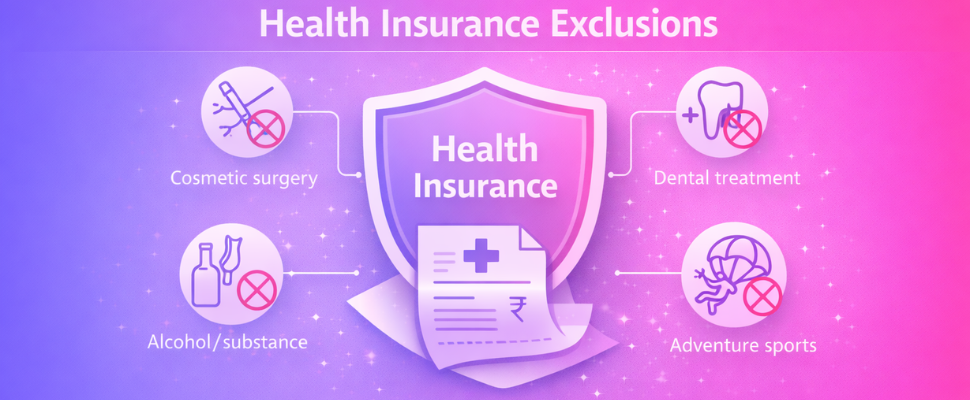
Health insurance gives families important money protection. It helps them pay for rising health costs in India. But some people with policies face a surprise claim denial. This often happens because their plan does not cover certain treatments or health problems. So, knowing about Health Insurance Exclusions is very important for every policyholder.
Your medical insurance works as a key safety net. Still, it usually does not pay for every single medical cost. Exclusions are specific health problems, treatments, or situations your plan clearly will not cover. You must carefully read your policy paper to know these limits. This helps stop surprise costs you might have to pay yourself later.
This guide explains permanent exclusions in health insurance. It helps you pick a plan that truly fits your needs.
What are health insurance exclusions?
Health Insurance Exclusions refer to health issues, treatments, or certain situations your plan will not pay for. Your policy papers clearly list these details. They show your exact policy coverage and what it does not include. Knowing these medical insurance exclusions helps avoid surprises when you make a claim.
Consider a car warranty. It covers major engine trouble. However, it typically does not pay for oil changes or routine service. Health plans work in much the same way. They come with clear limits. These exclusions are a normal part of all insurance terms. They help insurance companies manage their risk. This also helps keep health plans affordable for many. You must learn about permanent exclusions in health insurance before you buy any plan.
Why Should You Check Exclusions Before Buying Health Insurance?
Knowing what your health insurance policy will not cover is very important. Understanding permanent exclusions in health insurance helps you make a smart choice. This makes sure your plan truly fits your family’s health needs.
- Pick the Right Plan: You can choose health insurance that really matches your health requirements. This stops unexpected issues later about what your plan will pay. For instance, some plans typically do not cover cosmetic treatments.
- Reducing your chance of claim rejection is key. Clearly knowing about exclusions helps avoid a claim being turned down. This saves you from money worries during a medical emergency. You will understand which services your policy does not cover.
- Help with Money Planning: Awareness of exclusions lets you plan for costs you might pay yourself. This helps with your overall financial planning. You can get ready for expenses your policy will not cover.
- It's easier to compare policies well. When you know about exclusions, you can fairly compare plans from different insurers. This helps you get the best value plan. You might compare plans from Indian companies.
Types of health insurance exclusions
Health insurance plans list things they will not cover. It's smart to know about these different kinds. You should understand two main types of exclusions. These are permanent exclusions and temporary exclusions.
Permanent Exclusions
Your health insurance will never pay for certain health issues or treatments. These stay excluded as long as you have the policy. IRDAI rules list many such items. For example, plans often do not cover cosmetic procedures. Plans also usually do not cover treatments for injuries you cause yourself. Injuries from risky sports might also be permanent exclusions in health insurance. This type of exclusion helps set policy limits. It makes sure claims match the rules. A policy will not pay for plastic surgery you choose to get, for example.
Temporary Exclusions
People sometimes call these time-bound exclusions. Your policy will only pay for these health issues after a waiting period. Once this period is over, your policy will cover these treatments. Different health issues have different waiting periods. For example, pre-existing diseases often have a waiting period of 2-4 years. Maternity benefits also come with a waiting period, usually 9 months to 2 years. It is important to know about these temporary exclusions and their waiting times. This helps you plan for future medical needs.
How time-bound exclusions and waiting periods work:
Your health plan will not pay for some things right away. We call these time-bound exclusions. This means your cover starts later.
These are different from permanent exclusions in health insurance. Your plan will never cover those. You get protection for time-bound items after a certain waiting period. This period begins when your policy starts.
- Initial Waiting Period: You get cover for most claims after 30 days. This does not include accidents.
- For declared conditions, a Pre-existing Disease (PED) Waiting Period usually lasts 2 to 4 years.
- Specific diseases, like a hernia, usually have a waiting period of one or two years.
Confused between health insurance plans?
Let AI decide for you.
- AI compares 30+ insurers
- No sales pressure
- Result in 60 seconds
- 100% free
No spam. No calls unless you want them.
Standard exclusions found in health insurance policies
This section explains what most health insurance plans in India will not cover. It shows common things your policy won't pay for. The IRDAI sets general rules for these. But the exact list of things not covered for good can change. Different Indian companies, like Star Health, HDFC ERGO, or Niva Bupa, may have small differences in their policies. You should always read your chosen policy document carefully. Knowing these common exclusions is key for people with policies.
Non-medical Expenses
Your health insurance policy usually covers direct medical costs. It generally does not cover costs not directly tied to your treatment. For example, it usually does not cover admission fees, visitor
charges, and phone calls. Special food items are also not covered. Other common things not covered include toiletries, bandages, and hospital sign-up fees. These are some basic IRDAI exclusions.
Treatments Outside India
Health insurance policies bought in India usually cover you only within India. If you get medical treatment outside the country, your policy will not pay these costs. This is a standard thing not covered in health insurance policies.
Dangerous Activities and War
Your policy does not cover injuries from dangerous activities. This includes adventure sports, like skydiving or climbing mountains. Also, if you take part in illegal acts, your policy won't cover you. Treatment for injuries from war or acts of terrorism is usually not covered either.
Intentional Self-harm
Your policy does not cover any medical treatment if you hurt yourself on purpose. This rule also applies if you try to end your own life. Insurance policies will never pay for treatments related to intentional self-harm.
Cosmetic Procedures
Your policy does not cover procedures done only to change how you look. This includes plastic surgery and other cosmetic treatments. However, if an accident or illness makes plastic surgery necessary, your policy might cover it. You must check your policy for the exact details.
Dental and Eye Treatment
Your policy usually does not cover regular dental check-ups, root canals, or teeth whitening. It usually covers dental treatment only if an accident causes it. Most policies also do not cover regular eye check-ups, glasses, or contact lenses. Eye surgery to fix vision, like Lasik, is also often not covered.
Unproven Treatments
Your policy often does not cover experimental or alternative treatments. This includes therapies that lack scientific proof. Many doctors do not recognize these treatments. Most insurance companies list these as not covered.
Drug and Alcohol Abuse
Your policy does not cover treatment for illnesses or injuries caused by drug or alcohol abuse. It also usually does not cover programs to help with addiction. This forms a big part of common exclusions.
Always remember, your claims can be rejected if you do not tell the truth about important facts. This is especially true for existing health problems. Always give all important information when you buy a policy.
Confused between health insurance plans?
Let AI decide for you.
- AI compares 30+ insurers
- No sales pressure
- Result in 60 seconds
- 100% free
No spam. No calls unless you want them.
Pre-existing diseases (PED):
Pre-existing diseases (PEDs) are health issues you had before getting health insurance. Your insurance plan might not always leave these out. However, you typically wait a set time. This waiting period is usually 24 to 48 months.
Cosmetic and aesthetic treatments
Most health insurance plans in India do not cover cosmetic and beauty treatments. These are often considered permanent exclusions in health insurance. Plans usually do not pay for procedures you choose to have. This includes plastic surgery or botox. Insurers often do not see these treatments as medically needed to make you healthier. For example, a facelift or a hair transplant is usually not covered. Indian companies like HDFC ERGO or Niva Bupa often will not pay for these procedures. Most policies list these as common permanent exclusions.
Self-inflicted injuries and substance abuse
Health insurance plans usually do not cover injuries you cause yourself. This includes any suicide attempts. Your health policy also lists permanent exclusions. These are for treatments related to alcohol or drug abuse.
Maternity and infertility treatments
Most health insurance plans do not pay for having a baby. They often do not cover infertility treatments either. Your plan often will not pay for maternity care or IVF. However, you can add this coverage. You do this by using a special part called a rider.
Dental, vision, and hearing care
Routine dental care, eye exams for glasses, and hearing aids are often not covered. These items are typical permanent exclusions in health insurance. Your plan generally does not pay for them. Insurers see these as outpatient (OPD) expenses.
Hazardous activities and breach of law
Health insurance does not cover injuries from dangerous activities. It also does not pay for harm if you break the law. These are examples of permanent exclusions in health insurance. Your health insurance plan will always exclude these kinds of injuries.
How can you check for exclusions in a health policy?:
Buying smart helps you choose well. You must understand what your health insurance policy will not cover. Do this before you buy it. This helps you get full coverage.
Read Your Policy Document
Always get and read the full policy document. This is your most important step. Look for sections titled "Exclusions" or "What is Not Covered." These show all health issues and
treatments the company will not pay for. Also, pay attention to key rules from IRDAI.
Understand Specific Things Not Covered
Focus on permanent exclusions in health insurance. These are problems never covered, like cosmetic surgery. Also, check for specific diseases that are not covered. Understand waiting times for conditions, such as pre-existing ones. Different Indian companies, like Niva Bupa or ICICI Lombard, may have varied rules.
Confused between health insurance plans?
Let AI decide for you.
- AI compares 30+ insurers
- No sales pressure
- Result in 60 seconds
- 100% free
No spam. No calls unless you want them.
Ask Your Advisor
Do not hesitate to ask your insurance advisor questions. They can explain complex terms simply. While you compare health insurance, share any doubts about what is not covered. This ensures you buy a policy that truly fits your healthcare needs.
Conclusion
Permanent exclusions are a normal part of all health insurance policies. They show what your health insurance plan covers. Their job is not to deny claims unfairly. Instead, these set clear limits.
You must read your policy document with care. This helps you make an informed decision about your plan. Knowing what isn't covered improves your financial security.
Always compare different plans. Choose wisely to find a policy whose permanent exclusions feel right for you. This brings peace of mind.
Frequently Asked Questions
What is not covered in health insurance?
Generally, cosmetic procedures, self-inflicted injuries, or war-related conditions aren't covered. Non-medical expenses like toiletries or basic diagnostics done outside a hospital stay are usually excluded. Also, pre-existing conditions always have specific waiting periods (this can vary by insurer) before your policy will pay any claims.
Is osteoporosis covered by insurance?
Osteoporosis is generally covered under standard health insurance plans here in India. If diagnosed before purchasing the policy, it'll fall under a waiting period, typically 2-4 years (check your policy document for specifics). Once this period is over, your insurer covers the treatment expenses, including hospitalisation and medication.
What are the major exclusions in the policy meaning?
Exclusions are conditions or treatments your health insurance policy won't cover. Typically, these include pre-existing diseases until a set waiting period passes, cosmetic surgeries, or treatments for self-inflicted injuries (check your specific plan). You'll also find adventure sports injuries are usually not covered. Always review your policy document for the complete list.
Can lifestyle-related conditions like diabetes be permanently excluded?
No, Indian insurers won't permanently exclude lifestyle conditions such as diabetes. They are considered pre-existing diseases and become covered after a specific waiting period, typically 2 to 4 years (this varies by insurer and plan). This aligns with IRDAI guidelines, provided it was declared at policy buy.
What is the difference between an initial waiting period and a pre-existing disease waiting period?
The initial waiting period is a general period, typically 30 days, where no illness claims are covered, except for accidental hospitalisations. A pre-existing disease (PED) waiting period, however, just for applies to medical conditions you declared before buying the policy. This usually spans 2-4 years (as per IRDAI norms). You won't get coverage for those particular conditions until this longer period is over.

Written By
Raj Shankar
Principal Officer and General Manager at CoverTiger
With over 7 years of experience in the insurance and fintech industry, Raj Shankar has helped 10,000+ customers secure their families with the right insurance solutions. He has worked with leading brands such as Policybazaar, INDmoney, and CoverTiger, building strong expertise in health insurance, life insurance, sales leadership, and customer advisory. His mission is to make insurance simpler, more transparent, and accessible for every Indian family.