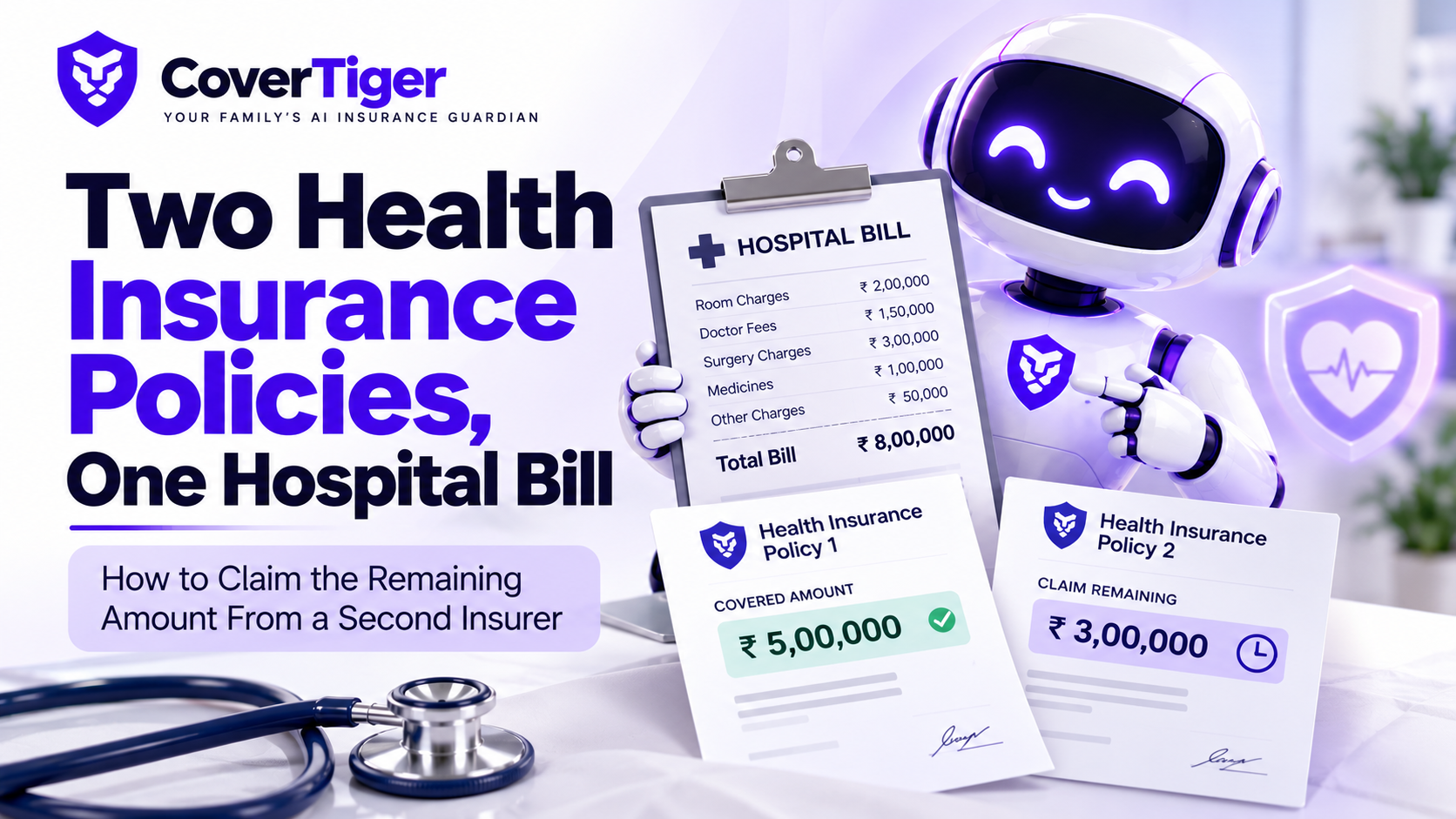
Two Health Insurance Policies, One Hospital Bill: How to Claim the Remaining Amount From a Second Insurer
Can you use two health insurance policies to pay one hospital bill? Yes. In India, if you have multiple indemnity-based health insurance policies, you can generally approach another insurer for the eligible unpaid balance, subject to the terms and conditions of both policies.
A hospital bill can sometimes exceed the sum insured under your first policy. In other cases, the first insurer may not approve certain expenses. Understanding how multiple health insurance claims work can help you navigate the process and potentially reduce your out-of-pocket expenses.
On October 12, 2026, The Economic Times explained how policyholders can approach a second insurer for an unpaid hospital bill and highlighted the applicable IRDAI guidelines.
The key takeaway is that you may be able to claim the eligible balance from a second policy, but you cannot receive reimbursement twice for the same medical expense.
Can You Claim From Two Health Insurance Policies for One Hospital Bill?
Yes. Under the IRDAI framework for multiple health insurance policies, a policyholder with more than one indemnity-based policy can choose a policy for the initial claim. If the available coverage is insufficient or some expenses are not admitted under the first policy, the policyholder may approach another insurer for the balance claim.
The second insurer independently assesses the claim under its own policy terms.
For example, you might have one health insurance policy purchased individually and another provided by your employer. Depending on the policies' terms, you may be able to use both to cover eligible hospitalisation expenses.
You can explore health insurance plans to understand the different types of coverage available.
Example: ₹8 Lakh Hospital Bill With Two Insurance Policies
Suppose you have two health insurance policies and need hospital treatment.
| Particulars | Amount |
|---|---|
| Total hospital bill | ₹8,00,000 |
| First policy's sum insured | ₹5,00,000 |
| Amount paid by the first insurer | ₹5,00,000 |
| Remaining unpaid bill | ₹3,00,000 |
| Amount requested from the second insurer | ₹3,00,000 |
In this example, the second insurer can assess the remaining ₹3 lakh under its own policy.
If the entire remaining amount is admissible under the second policy, it may pay that amount. If some expenses are excluded, restricted or otherwise not payable under the second policy, you may still have to pay those expenses yourself.
Important: The second insurer does not automatically have to pay the remaining ₹3 lakh. The amount payable depends on the admissible expenses, policy limits, exclusions, deductibles and other applicable conditions.
What If the First Insurance Company Rejects Some Hospital Expenses?
This is an important point for people searching for information about a health insurance claim from a second insurer.
Suppose your total hospital bill is ₹8 lakh. Your first insurer pays ₹5 lakh because the sum insured has been exhausted. The first insurer also does not admit some expenses worth ₹50,000.
You may approach the second insurer for the unpaid balance, including the expenses not admitted by the first insurer. However, the second insurer will assess those expenses under its own policy wording.
For example:
- The first insurer pays ₹5 lakh.
- The remaining bill is ₹3 lakh.
- The second insurer reviews the remaining expenses.
- If the second policy admits ₹2.5 lakh, it may pay ₹2.5 lakh.
- You would remain responsible for the unpaid ₹50,000, subject to the circumstances and policy terms.
The fact that the first insurer rejected an expense does not automatically mean the second insurer must reject it too. Equally, it does not guarantee that the second insurer will pay it.
What Do IRDAI Rules Say About Multiple Health Insurance Policies?
IRDAI's guidance on multiple health insurance policies distinguishes between indemnity-based and benefit-based policies.
1. Indemnity-Based Health Insurance
These policies generally reimburse admissible medical expenses incurred by the policyholder, subject to the policy terms and sum insured.
Confused between health insurance plans?
Let AI decide for you.
- AI compares 30+ insurers
- No sales pressure
- Result in 60 seconds
- 100% free
No spam. No calls unless you want them.
Examples include many hospitalisation policies, family floater policies and top-up or super top-up plans.
Where multiple indemnity-based policies cover the same hospitalisation expenses, the policyholder can choose the policy for the initial claim and may approach other insurers for the eligible balance.
The combined reimbursement cannot exceed the admissible medical expenses actually incurred.
2. Benefit-Based Insurance
Benefit-based policies pay a predefined amount when a covered event occurs, subject to the policy terms.
Examples may include certain critical illness benefits or hospital cash benefits.
The payment structure is different from reimbursement of actual hospital bills. Eligible benefits may be payable independently under multiple policies.
You should check the wording of each policy to determine whether it is indemnity-based or benefit-based.
For the official regulatory explanation, read IRDAI's FAQs on Health Insurance Regulations.
How to Claim the Remaining Hospital Bill From a Second Insurer
If your first health insurance policy does not cover the full eligible hospital bill, follow these steps.
Step 1: Submit the Initial Claim
Start with the health insurance policy you have chosen for the initial claim. Depending on the hospital and policy, you may use a cashless facility or submit a reimbursement claim.
Step 2: Obtain the First Insurer's Settlement Details
Ask for the claim settlement letter or other official documentation showing:
- The total amount claimed
- The amount approved and paid
- Expenses that were not admitted
- The reason for deductions, where applicable
- The remaining unpaid amount
Keep the claim reference number and relevant correspondence.
Step 3: Inform the Second Insurer
Contact the second insurer or its third-party administrator (TPA). Explain that you have already submitted the hospital bill to another insurer and want to claim the eligible balance.
Follow the second insurer's process and ask which documents are required.
Step 4: Submit the Required Documents
Provide the available hospital records, first insurer's settlement details and any other documents requested by the second insurer.
Step 5: Follow Up on the Claim
Keep a written record of the submission date, claim reference number, requests for additional information and responses from both insurers.
If the claim is delayed or disputed, ask the insurer for a written explanation.
Documents Required to Claim From a Second Health Insurer
The second insurer needs to establish the total medical expenses, the amount already paid and the expenses still being claimed.
Confused between health insurance plans?
Let AI decide for you.
- AI compares 30+ insurers
- No sales pressure
- Result in 60 seconds
- 100% free
No spam. No calls unless you want them.
Depending on the insurer and the circumstances, you may need:
- Final and itemised hospital bills
- Hospital payment receipts
- Discharge summary
- Prescriptions and investigation reports
- Claim form for the second policy
- Policy details for both policies
- First insurer's settlement or partial-settlement letter
- Details of expenses not admitted by the first insurer
- Copies of relevant correspondence
- Any additional documents requested by the second insurer
Keep copies of the documents submitted and proof of submission. If original documents have been retained by the first insurer, ask the insurer or TPA about the process for obtaining the records or certified copies required for the second claim.
Can You Use Two Policies for a Cashless Hospitalisation?
Possibly, but the process depends on the hospital, insurers, TPAs and applicable policy procedures.
If you intend to use two policies for the same hospitalisation, inform the hospital insurance desk and the insurers as early as possible. Explain that one policy may not cover the entire admissible bill.
Do not assume that the second insurer will automatically approve cashless treatment simply because the first insurer has approved part of the bill. The second insurer may require separate authorisation, supporting documents or a reimbursement process.
Before discharge, clarify who is responsible for any amount not covered by either policy.
Common Mistakes to Avoid When Claiming From Two Insurers
Assuming the Second Insurer Must Pay the Entire Balance
The second insurer assesses the claim independently. Expenses excluded under its policy may remain payable by you.
Failing to Disclose the First Claim
Provide accurate details about the first policy, the amount paid and the amount still being claimed.
Losing the Settlement Letter
The first insurer's settlement letter helps establish how much has already been paid and why some expenses remain unpaid.
Claiming the Same Expense Twice
You cannot receive reimbursement twice for the same medical expense under indemnity-based policies.
Waiting Until the Last Moment
Contact the second insurer early, understand its requirements and keep the necessary documentation ready.
Ignoring Policy Exclusions
Read the terms of both policies carefully. Room-rent limits, deductibles, co-payments, exclusions and other conditions can affect the amount payable.
For additional guidance, read CoverTiger's article on how to choose a health insurance plan.
How an AI Health Insurance Advisor Can Help
Understanding multiple health insurance policies can be confusing, especially when the policies have different exclusions, limits and claim procedures.
An AI Health Insurance Advisor can help users organise policy information, understand common insurance terminology and prepare questions for their insurers.
For example, you could ask an AI assistant:
- What documents should I collect from my first insurer?
- What is the difference between an admissible expense and a non-payable expense?
- Which sections of my second policy should I check before submitting a balance claim?
- What questions should I ask my insurer about a partial settlement?
Confused between health insurance plans?
Let AI decide for you.
- AI compares 30+ insurers
- No sales pressure
- Result in 60 seconds
- 100% free
No spam. No calls unless you want them.
AI can help explain policy language and organise information, but it cannot guarantee claim approval or replace the insurer's formal assessment.
Consumers can explore CoverTiger's health insurance plans and use the health insurance comparison resource to learn more about comparing coverage.
What Should You Do If the Second Insurer Rejects Your Claim?
If your second health insurer rejects the claim or pays less than expected, follow these steps:
- Request the decision and reasons in writing.
- Check the policy clauses cited in the rejection.
- Compare the rejected expenses with the hospital bill and the first insurer's settlement details.
- Submit any missing documents or clarification requested by the insurer.
- Raise a formal grievance with the insurer if you believe the decision is inconsistent with the policy terms.
- If the matter remains unresolved, consider the applicable escalation options, including IRDAI's Bima Bharosa grievance portal and the Insurance Ombudsman, where eligible.
Keep all documents and correspondence together throughout the process.
Frequently Asked Questions
Can I claim from two health insurance policies for one hospital bill?
Yes. You may be able to claim eligible expenses across multiple indemnity-based policies, subject to their terms. The total reimbursement cannot exceed the admissible expenses actually incurred.
Can I claim the balance from a second insurer if my first policy's sum insured is exhausted?
Yes, you may approach the second insurer for the eligible balance. The second insurer will assess the remaining expenses under its own policy terms.
Can I claim expenses rejected by my first health insurer from the second insurer?
You can submit those expenses to the second insurer for assessment. Payment is not guaranteed because the second policy's exclusions, limits and conditions apply independently.
What documents are needed for a second health insurance claim?
Common documents include itemised hospital bills, payment receipts, discharge summaries, claim forms, policy details and the first insurer's settlement letter. The second insurer may request additional documents.
Can I use two health insurance policies for cashless treatment?
It may be possible, depending on the hospital, insurers and their processes. Contact both insurers and the hospital insurance desk in advance to confirm the procedure.
Can I receive twice the hospital bill amount from two health insurance companies?
No, not for the same medical expenses under indemnity-based policies. The combined reimbursement cannot exceed the admissible expenses actually incurred. Benefit-based policies follow different rules.
What should I do if the second insurer rejects my claim?
Ask for the reasons in writing, review the relevant policy clauses, submit any required clarification and use the insurer's grievance process if necessary. Further escalation options may include IRDAI's Bima Bharosa portal and the Insurance Ombudsman, subject to applicable requirements.
Final Takeaway
Having two health insurance policies may provide an additional route to claim eligible hospital expenses when one policy does not cover the full bill.
However, a second policy is not an automatic guarantee that every unpaid expense will be reimbursed. Each insurer assesses the claim under its own policy terms, and the combined payout under indemnity-based policies cannot exceed the admissible medical expenses actually incurred.
The best approach is to understand both policies before treatment where possible, inform the insurers about multiple coverage, preserve the first insurer's settlement documents and follow the second insurer's claim procedure carefully.
For consumers who want to understand coverage options before purchasing a policy, CoverTiger offers health insurance information and comparison resources.

Written By
Raj Shankar
Principal Officer and General Manager at CoverTiger
With over 7 years of experience in the insurance and fintech industry, Raj Shankar has helped 10,000+ customers secure their families with the right insurance solutions. He has worked with leading brands such as Policybazaar, INDmoney, and CoverTiger, building strong expertise in health insurance, life insurance, sales leadership, and customer advisory. His mission is to make insurance simpler, more transparent, and accessible for every Indian family.