Healthcare costs in India are rising quickly. High medical inflation makes good treatment very expensive. Just one hospital stay can quickly use up your savings. Health insurance offers important financial protection. It helps manage risks during medical emergencies. This goes beyond tax benefits under Section 80D.
You need to understand the different types of health insurance. This is the first step to pick the right plan. Your family’s needs and life stage typically require different health coverage. For example, a young couple might choose a family floater plan. A single person, however, often prefers a standalone policy.
Key Takeaways
Two main kinds of health insurance exist. These are indemnity plans and fixed benefit options. This guide discussed many different types of health coverage. Understanding health insurance and types of plans helps in making informed decisions.
Medical costs in India are rising quickly. Choosing the right kinds of health insurance ensures you have enough Sum Insured. Access to cashless treatment is also crucial for any health plan.
Different kinds of health insurance cater to specific needs at various life stages. These types of health coverage include:
- Critical illness cover
- Health insurance for seniors
- Maternity insurance
You can get significant tax savings. These are for health insurance payments made under Section 80D. This applies to most kinds of health insurance policies.
Broad Classification: Indemnity vs. Fixed Benefit Plans
You will find two main types of health insurance. These are indemnity health insurance and fixed benefit plans. It is wise to know these kinds of health insurance. This helps you make smart choices for your health coverage.
Indemnity plans typically pay you back for hospital bills. They cover costs up to the sum insured you picked. For example, a Star Health plan might pay for your hospital stay. It could also cover treatments. In India, this is the most common type of health coverage.
On the other hand, a fixed benefit plan gives a set amount of money. This payment happens if a certain event occurs. Think of critical illness cover or a hospital daily cash plan. These plans do not depend on how much you actually spend. The main difference is reimbursement vs fixed benefit. Indemnity plans look at your actual costs. Fixed benefit plans offer a pre-set amount. For strong protection, combine an indemnity plan with fixed benefit covers. Knowing about health insurance and types helps you choose well.
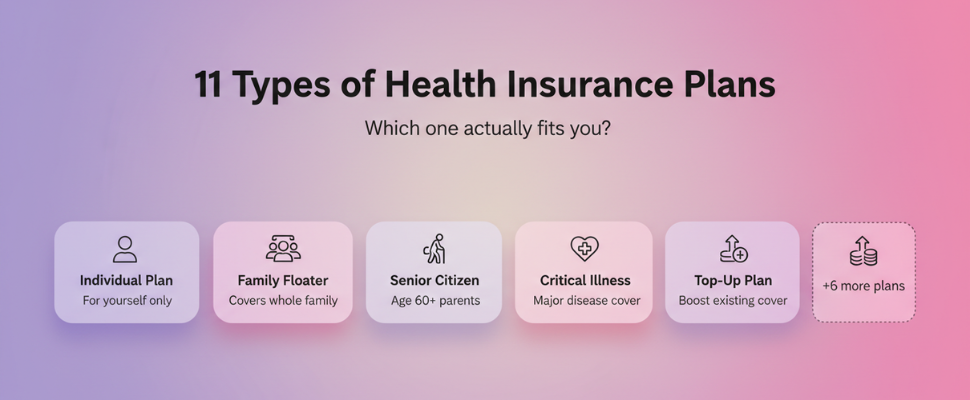
11 Different Types of Health Insurance Plans
Knowing the main groups helps you. You should also learn about the many types of health insurance. Different health plans meet varied needs. These health insurance variants are designed for specific people. They also suit different families and health risks. Later parts will explain each medical insurance type fully. This knowledge helps you pick the right sum insured. You can also understand cashless hospital stay options. It clarifies rules for waiting periods too.
1. Individual Health Insurance
Among the types of health insurance, individual plans cover just one person. These plans give you a set amount of money for cover. Your premium typically depends on your age and past health.
- Each person gets their own sum insured limit.
- Cost Factors: Premiums vary by the person's age and health.
- Expect specific terms like a waiting period or co-payment.
Best For: Single individuals or those needing higher, separate cover.
2. Family Floater Health Insurance
Family floater plans are a type of health insurance. These plans cover your whole family. They include your spouse, children, and sometimes parents. Everyone shares one sum of money for coverage. This plan often costs less than buying separate policies.
- All family members share one sum of money for coverage.
- It covers your spouse, dependent children, and sometimes parents.
- Families usually find this choice saves them money.
Best For: Families who need one plan to cover everyone.
3. Senior Citizen Health Insurance
This health insurance is for people aged 60 and older. It helps with health needs often seen in seniors. This makes it stand apart from other types of health insurance plans.
Confused between health insurance plans?
Let AI decide for you.
- AI compares 30+ insurers
- No sales pressure
- Result in 60 seconds
- 100% free
No spam. No calls unless you want them.
- Many policies include at-home care and AYUSH treatment.
- Common age-related illnesses find coverage here.
- You might get a shorter waiting period for existing health problems.
- Some plans typically feature a co-payment clause.
Best For: Individuals 60+ seeking specific medical protection.
4. Critical Illness Insurance
Critical illness plans offer a special kind of health insurance. They provide a fixed sum of money directly to you. You get this payment when doctors find certain serious diseases. These policies often cover conditions like cancer, stroke, and heart attacks. This money can help pay for treatment expenses. It might also help clear old debts or replace lost income while you recover.
- You receive a lump sum payment if diagnosed with a severe illness.
- Major diseases like cancer or a heart attack are typically covered.
- The funds can help with medical bills or make up for lost wages.
Best For: Individuals who need financial support if they face a critical health condition.
5. Top-Up and Super Top-Up Plans:
Top-Up and highly Top-Up plans give you more insurance cover. This extra cover starts after you meet a set deductible amount. A normal Top-Up uses this deductible for each claim. However, a highly Top-Up uses it for all your medical costs in a year. This often gives you more safety without a high cost. It is a smart choice among different types of health insurance.
- Your cover starts once you meet your chosen deductible.
- You get more protection for a lower yearly price.
- These policies are good for raising your current health policy limits.
Best For: People who want more cover but do not want to buy another expensive main policy.
6. Group Health Insurance
Employers give Group Health Insurance. People also call it Group Medical Cover (GMC). This plan often covers existing health issues from day one. It typically has no waiting periods.
- Existing health problems get covered immediately.
- The coverage ends once an employee leaves the company.
- This is one type of health insurance available.
Best For: Workers who receive their health plan from their job.
7. Maternity Health Insurance
Maternity health insurance helps pay for childbirth costs. This includes care for the mother before and after the baby arrives. Many policies also cover the newborn for a certain time. This is a key option among health plans. A waiting period, often 9 months to 4 years, typically applies.
- It pays for delivery and hospital stays.
- Your plan covers pre- and post-delivery care.
- Newborn Cover: The baby gets protection for a fixed term.
Ideal For: Families planning to have a baby who need help with maternity expenses.
8. Personal Accident Insurance
Personal Accident Insurance pays you if an accident hurts you. It covers death from an accident. The plan also helps with lasting or short-term disability. You get a single large payment or weekly cash payouts. This helps keep your family's money safe. It is different from regular health insurance.
- You get money if an accident causes death or lasting total disability.
- The policy gives weekly payments for short-term disability.
- It protects your family's income.
Best For: People who want to keep their income safe after an accident.
9. Mediclaim Insurance
Confused between health insurance plans?
Let AI decide for you.
- AI compares 30+ insurers
- No sales pressure
- Result in 60 seconds
- 100% free
No spam. No calls unless you want them.
Understanding the various types of health insurance is important. Mediclaim is a common type of health insurance plan. It helps pay for specific hospital expenses. These often include room rent, surgery costs, and doctor fees. Newer Mediclaim plans typically offer more benefits.
- It pays for approved charges when you stay in the hospital.
- Your plan might cover room rent, nursing care, and doctor visits.
- A co-payment rule often applies to claims.
Best For: People seeking basic protection for hospital stays.
10. Disease-Specific Insurance:
This health plan focuses on specific medical conditions. It helps those who might not get full coverage from other plans. Many have health problems they had before starting a policy. These plans offer special benefits to manage just one specific illness.
• This covers the costs for a named disease treatment.
• Get benefits tailored for certain health needs.
• It is good for ongoing issues such as diabetes or heart problems.
Best For: People with specific health problems they already had.
11. Unit Linked Health Plans (ULIPs):
Unit Linked Health Plans mix health cover with investment. Part of your payment handles medical costs. The remaining money goes into market funds. Earnings from these plans typically rely on market ups and downs.
- You get both health protection and a chance to invest.
- Your premium splits into two parts, one for health, one for funds.
- Money in the fund can help with future health expenses.
Best For: Anyone seeking both health cover and investment growth.
Key Factors to Consider When Choosing a Health Insurance Plan:
To pick the right health insurance, you need to check policy details carefully. This helps you choose well from the many types available.
Sum Insured
- This is the top amount your insurer will pay.
- Ensure it covers high medical costs in your city.
- Think about what your family floater plan needs.
Waiting Periods
- You must wait before some benefits start.
- Learn the waiting period for specific treatments.
- Check how long you wait for pre-existing diseases.
Room Rent Capping
- Some plans limit daily room charges.
- This can change how much you pay yourself.
Network Hospitals
- These hospitals let you get cashless treatment.
- See if your preferred hospitals are on the list.
Claim Settlement Ratio
- This number shows how many claims an insurer pays.
- A higher claim settlement ratio is usually better.
- Look for insurers with easy digital claim processes.
Co-payment Clauses
Confused between health insurance plans?
Let AI decide for you.
- AI compares 30+ insurers
- No sales pressure
- Result in 60 seconds
- 100% free
No spam. No calls unless you want them.
- You pay a fixed part of the claim amount.
- This often lowers your premium but raises your expense during a claim.
Why Is Health Insurance Important?:
Here are some key benefits of health insurance. These points show why it is very important for many Indian families:
- Financial Protection: Health insurance keeps your savings safe from sudden medical bills. Hospital stays often cost a lot. Such bills can quickly spend your hard-earned money.
- Fighting Medical Inflation: Healthcare costs in India are rising fast. A good health policy helps cover these higher prices. This shields your finances from increasing medical inflation.
- Get Cashless Treatment: Most Indian insurance companies offer cashless treatment at their network hospitals. You do not need to pay upfront for approved medical care. The insurer typically settles the hospital bills directly.
- Tax Savings: You can get tax deductions for premiums paid. This applies to types of health insurance under Section 80D of the Income Tax Act. It can lower your taxable income.
- Enjoy Peace of Mind: Knowing your family's health needs are covered gives you great peace of mind. It lets you focus on getting well, not on financial worries.
Top Health Plans at CoverTiger:
CoverTiger helps you quickly compare all 11 types of health insurance plans. You will see prices and features side-by-side. Options include Family Floater plans, and also policies for Senior Citizens. Our platform offers fair advice. It helps you find plans that balance benefits and cost.
Think about your family's needs and health history. Look for the right amount of coverage. You might also consider maternity insurance or a top-up health plan for more protection.
Conclusion:
We have talked about different types of health insurance. The best choice usually fits what you and your family need. You might combine an indemnity plan. For example, use a Family Floater. Adding a fixed-benefit Critical Illness policy also gives strong protection. This way helps you plan your money for health emergencies.
To choose well, compare health insurance plans on CoverTiger. Look for a good sum insured. Also, check for good cashless hospitalization options. It is smart to buy health insurance early. Protect your family's health and money today, before any medical needs happen.
Frequently Asked Questions
Q: What are the 4 types of insurance?
In India, we typically group insurance into four main types: Life, Health, Motor, and other General insurance. Life insurance provides financial protection for your family if something untoward happens to you. Health plans cover medical expenses and often provide tax benefits under Section 80D (this can vary by insurer). Motor insurance is legally mandatory here, with general insurance covering assets like home or travel.
Q: Can I buy a separate health plan for my parents and spouse?
You absolutely can buy separate health plans for your parents and spouse. It’s often a smart move to tailor coverage, especially for parents who might need specific senior citizen plans (this can vary by insurer). You’ll typically get different sum insured options for each, and the premiums are eligible for Section 80D tax benefits.
Q: Is maternity cover included in all health insurance plans?
No, maternity cover isn't a standard inclusion in all Indian health insurance plans. Typically, it's offered as an optional rider or a dedicated maternity policy, which always comes with a waiting period (often 9 months to 4 years). You'll definitely want to check the specific policy documents carefully for details.
Q: What are the tax benefits of buying health insurance in 2026?
You'll continue to claim tax deductions under Section 80D for health insurance premiums in 2026. This covers yourself, your spouse, and dependent children. An additional deduction applies for premiums paid for your parents, usually with higher limits for senior citizens (do confirm the exact figures from the updated Finance Act).
Q: How does a Top-Up health insurance plan work?
A Top-Up health plan kicks in after your medical expenses exceed a pre-defined deductible amount. This deductible is typically covered by your base health policy or paid by you directly. Once that initial sum is utilized, the Top-Up insurer covers subsequent hospitalisation costs up to its chosen sum insured (this can vary). It's a cost-effective way to get much higher overall coverage for bigger medical bills.
Q: Which is the best private health insurance?
The "best" private health insurance really varies for everyone, depending on your health, budget, and family's specific needs. You'll want to review things like the sum insured, the cashless network (especially in your city), and the insurer's claim settlement ratio (which is typically high with IRDAI-regulated companies). It's about finding a policy that offers the right coverage for your peace of mind.

Written By
Raj Shankar
Principal Officer and General Manager at CoverTiger
With over 7 years of experience in the insurance and fintech industry, Raj Shankar has helped 10,000+ customers secure their families with the right insurance solutions. He has worked with leading brands such as Policybazaar, INDmoney, and CoverTiger, building strong expertise in health insurance, life insurance, sales leadership, and customer advisory. His mission is to make insurance simpler, more transparent, and accessible for every Indian family.