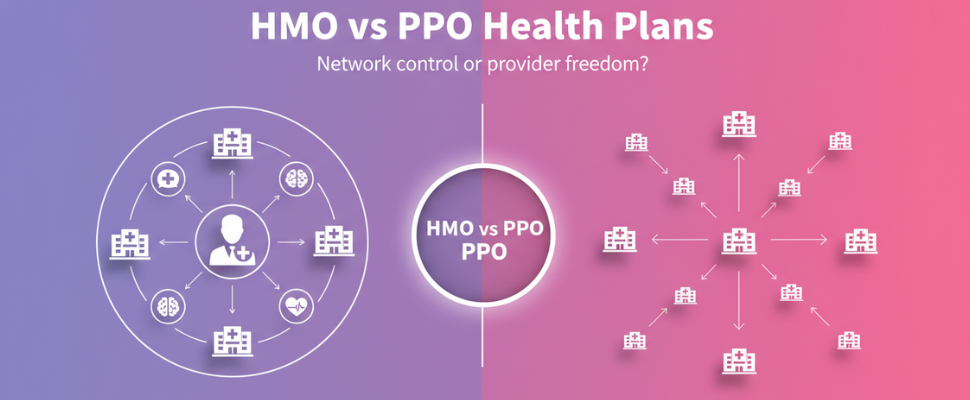
Picking the best healthcare coverage matters a lot for families. Many health insurance plans in India use a provider network. HMO (Health Maintenance Organization) and PPO (Preferred Provider Organization) are two common types. Both systems typically use network hospitals. But they work very differently when members need medical services. Understanding the main difference between HMO vs PPO plans is key. This guide helps explain these choices. It shows you how to pick the right plan for your healthcare needs.
What is an HMO(health maintenance organization)?
An HMO, or Health Maintenance Organization, is a health insurance plan. It offers medical care from a specific group of doctors, hospitals, and other providers. You must pick a Primary Care Physician (PCP) from this in-network group.
This chosen PCP handles all your health services. Your PCP must also provide referrals before you can visit a specialist. Without a referral, the plan typically does not pay for specialist visits.
Usually, the plan does not cover care outside its approved network. However, this rule changes for a medical emergency. HMOs often have lower monthly costs. They also offer lower out-of-pocket expenses. This is a key point when you compare an hmo vs ppo. Understanding this helps you see the difference between hmo and a ppo.
What is a PPO (preferred provider organization)?:
A PPO, or Preferred Provider Organization, is a health plan. It offers more flexibility for choosing your doctors and hospitals. This plan has a specific provider network.
You typically pay less for doctors and hospitals within this network. However, you can see doctors out-of-network. This will mean you pay more from your own pocket. With a PPO, you need no referrals to see a specialist. A primary care doctor is also not required. PPO plans often have higher monthly costs. This is a key point in the hmo vs ppo discussion.
HMO or PPO: What is the difference between?
Understanding the difference between HMO and PPO plans is very important. This knowledge helps you choose the right health coverage. While both plans offer medical benefits, they work quite differently for getting care. Often, an HMO means lower health plan costs. However, a PPO typically gives you more choices of doctors and network flexibility.
To help you decide, an HMO vs PPO comparison shows their main features. These points highlight the key differences between HMO and PPO plans.
- You must pick a Primary Care Doctor (PCP) with HMO plans. PPO plans do not ask for a PCP.
- Referrals for Specialists: HMOs require your PCP to give you a referral before seeing a specialist. PPOs do not need such referrals.
- Most HMOs only cover care from doctors in their network, except for emergencies.
- Out-of-Network Care: HMOs generally offer no coverage if you go out of network, unless it's an emergency. PPOs do cover care outside their network, but you will pay more for it.
- HMOs often have lower monthly payments and smaller costs for doctors in their network. PPOs usually come with higher monthly payments, and your out-of-network costs will also be higher.
Picking your doctors and staying in network:
Choosing between hmo vs ppo changes which doctors you can visit. Both plans have specific doctor networks. Knowing this helps you manage medical costs.
- HMO: Pick a main doctor within the network. You will need a referral to see specialists.
- A PPO lets you visit any doctor. Care outside the network typically costs more.
- This choice is often best for those who value network options and referral rules.
Paying for care: premiums and what you pay out of pocket
Understanding the various health plans in India helps you manage your money better. Health insurance plans often set their costs differently. These costs usually depend on the hospitals in their network and what you pay from your pocket.
Your monthly payment can change a lot. The money you pay during treatment also varies greatly between these plan types. When people look at health insurance globally, terms like hmo vs ppo show how hospital networks work. In India, plans give you different levels of control over expenses.
- Cashless Treatment: Many plans let you get cashless treatment at hospitals in their network.
- Sometimes you must pay a part of the bill for certain treatments, especially at non-network hospitals.
- Deductibles can lower your monthly payments, but you pay more upfront when you claim. • Your monthly payments change based on the coverage you get and the hospitals you can use.
- Rules from IRDAI make sure plan benefits and costs are always clear for you.
This type of plan is generally best for people who want clear rules for costs and network benefits for their health coverage.
Confused between health insurance plans?
Let AI decide for you.
- AI compares 30+ insurers
- No sales pressure
- Result in 60 seconds
- 100% free
No spam. No calls unless you want them.
How primary care physicians and referrals work:
Some health plans ask you to pick a Primary Care Physician (PCP). This doctor handles your general health needs. They also approve visits to other specialist doctors. Knowing about hmo vs ppo plans helps you pick the right one.
- HMO plans usually need a PCP. This doctor will give you a referral to see a specialist.
- PPO plans let you see specialists directly. You do not need a PCP first.
This helps you decide if you prefer referrals or direct specialist visits.
Comparing the pros and cons of HMO and PPO plans:
Choosing the right plan means understanding its features. We compare hmo vs ppo plans here.
HMO Plans: What's Good and Bad
HMO plans offer key hmo advantages. They usually have lower monthly health insurance premiums. Your main doctor handles all your medical care. This ensures steady oversight. Many HMOs also offer a good cashless claim facility in their network. A main part of hmo pros and cons is network limits. You must pick doctors and hospitals from a specific list. Also, you always need a referral to see a specialist.
PPO Plans: What's Good and Bad
PPO plans give you more freedom. You do not need a referral to see any specialist. You can also visit doctors outside the plan's network. However, this often means higher costs. The main ppo pros and cons involve these expenses. PPO plans typically have higher health insurance premiums. Seeing doctors outside the network means paying more from your pocket. You might file a reimbursement claim for such services. These are important ppo limitations.
Why an HMO plan might be the right fit
Some health plans use a specific group of hospitals and doctors. This often comes up when people discuss HMO vs PPO health plans. Such plans can make your health insurance premiums simpler to understand. They offer a more controlled system for your care. You
generally pay less for services within your insurer's chosen hospitals and doctors.
For instance, Indian companies like Star Health or Niva Bupa may give better prices. This happens when you pick their preferred hospitals for cashless treatment. Knowing your network is important when you choose different plan types. This is especially true with HMO vs PPO options.
- You get lower monthly payments.
- A main doctor helps guide your medical care.
- Less paperwork comes with using network hospitals.
- Costs for network services are usually clear.
Best For: Individuals who want lower costs and managed medical care within a set network.
Some trade-offs of choosing an HMO:
Some health insurance plans in India use a fixed group of doctors and hospitals. These plans are much like HMO vs PPO plans found in other countries. With these plans, you pick doctors and hospitals only from a set list. The insurer typically does not pay for care you get outside this group. This rule changes only for true emergencies.
To see a specialist, you must first visit your main doctor. This doctor needs to be part of the plan's network. Your main doctor will then give you a referral. That specialist must also be in the approved network. These plans usually cost less than plans offering more options.
- You get a specific, approved list of doctors and hospitals to pick from.
- Treatment outside the network often goes unpaid by the insurer.
- Referral Needed: Your main doctor must send you to a specialist.
- These plans generally have lower monthly fees.
Confused between health insurance plans?
Let AI decide for you.
- AI compares 30+ insurers
- No sales pressure
- Result in 60 seconds
- 100% free
No spam. No calls unless you want them.
Best For: People wanting lower monthly costs who are fine using a fixed group of doctors and hospitals.
Benefits you get with a PPO plan:
PPO plans usually offer good flexibility. This matters when you compare HMO and PPO plans. They typically give you more choice in your healthcare.
- You can pick any doctor or hospital. This includes those outside the main network.
- The plan pays for doctors both inside and outside its network.
- You often do not need a referral to see a specialist.
Best For: People who want many choices for doctors and hospitals.
Drawbacks to consider with PPO plans
PPO plans offer more freedom. However, they typically cost more money. Knowing the hmo vs ppo choice helps you manage these expenses. You handle your own care.
- Monthly payments are often higher.
- Your out-of-pocket medical bills might increase.
- Out-of-network care: The cost of bills can be less clear. Best For: Individuals who want more choices and are fine with paying higher costs.
How to pick between an HMO and a PPO plan:
Choosing the right health insurance plan starts with knowing what you need. This guide will help you see if an HMO or a PPO plan fits you better. It is important to grasp the main difference in hmo vs ppo plans.
When an HMO might be a good fit:
Consider an HMO plan if saving money is your top goal. You generally use doctors and hospitals within a set network. Also, you will typically need a referral to see a specialist. This often means an hmo right for me situation.
When a PPO might be a good fit:
A PPO plan usually suits you if you want more freedom. You can pick almost any doctor or hospital, even outside the network. There is no need for a referral to visit a specialist. This suggests a ppo right for me situation.
To choose hmo or ppo, think about your budget. Look at your current health and how much control you want over your doctors.
Why an HMO plan might be the right choice:
With HMO plans, one main doctor guides your health care. These plans typically cost less, offering steady prices. This matters greatly as you choose between hmo vs ppo options.
- You look for lower, more predictable health expenses.
- A single primary care doctor feels right for you.
- Your trusted doctors already work within the plan's network.
- Frequent visits to specialists are not a big need.
When a PPO plan works better:
PPO plans typically give you more freedom to pick doctors. You will not need a referral to see specialists. This shows a main hmo vs ppo difference.
- You can choose any provider without prior permission.
- See specialists outside your plan's network.
- Paying higher premiums is okay for more options.
- Get care in other cities when you travel.
Confused between health insurance plans?
Let AI decide for you.
- AI compares 30+ insurers
- No sales pressure
- Result in 60 seconds
- 100% free
No spam. No calls unless you want them.
Compare health plans through Cover Tiger:
Cover Tiger helps you compare insurance easily. First, understand hmo vs ppo differences. Our platform lets you compare health plans from many Indian companies.
This tool gives fair advice, based on your needs. You can check doctor networks simply. Also, compare monthly health insurance costs. It helps clarify co-payment details too. This shows how you might get money back for claims. Use Cover Tiger to find insurance that truly fits you. Make a smart choice.
Conclusion
This hmo ppo summary details key differences. HMO plans usually mean lower costs and organized care. While PPO plans offer more freedom, they often cost more.
Your hmo vs ppo choice depends on your needs. Consider your budget, health requirements, and doctors. This health insurance conclusion helps you make your final choice based on what matters most.
Always check your chosen plan's specific details. Understand the co-payment clause and deductible options before signing up.
Frequently Asked Questions
Q: What is the difference between an HMO and an EPO?
In India, we typically don't use HMO or EPO terms; our health insurance plans focus on network hospitals for cashless treatment. Your insurer directly settles bills at these empanelled hospitals. Outside this network, you'll usually pay upfront and then claim reimbursement (this can vary by plan). So, it's about the flexibility you get choosing a hospital for cashless benefits.
Q: What is the difference between HMO and PPO in medical billing?
HMO and PPO aren't terms we typically use for health insurance here in India, at least not in the same way they are internationally. Instead, our plans primarily distinguish between network hospitals for cashless treatment and non-network ones (this can vary by insurer). In most cases, you'll use cashless facilities at listed network hospitals; otherwise, it's a reimbursement process after you've paid upfront.
Q: What is not covered by an HMO?
HMO plans typically won't cover pre-existing conditions during the initial waiting period, cosmetic procedures, or routine dental work not due to an accident. Non-medical expenses like attendant charges also are usually not included (this can vary by insurer). OPD visits and many alternative therapies often need specific add-ons for coverage.
Q: Why would a person choose a PPO over an HMO?
Many individuals choose a PPO for its broader network of hospitals and doctors. You gain more flexibility to select specialists directly, typically without needing a referral first (this can vary slightly by insurer). It's a trade-off for a generally higher premium, but the freedom of choice is often crucial for them.
Q: Can I switch from an HMO to a PPO outside of the open enrollment period?
No, generally, you can't switch your health plan type, like from an HMO to a PPO, outside your policy's annual renewal period here in India. Such significant changes aren't usually permitted mid-term. You'll typically need to wait for your renewal window to make these alterations (always check your policy document).

Written By
Raj Shankar
Principal Officer and General Manager at CoverTiger
With over 7 years of experience in the insurance and fintech industry, Raj Shankar has helped 10,000+ customers secure their families with the right insurance solutions. He has worked with leading brands such as Policybazaar, INDmoney, and CoverTiger, building strong expertise in health insurance, life insurance, sales leadership, and customer advisory. His mission is to make insurance simpler, more transparent, and accessible for every Indian family.