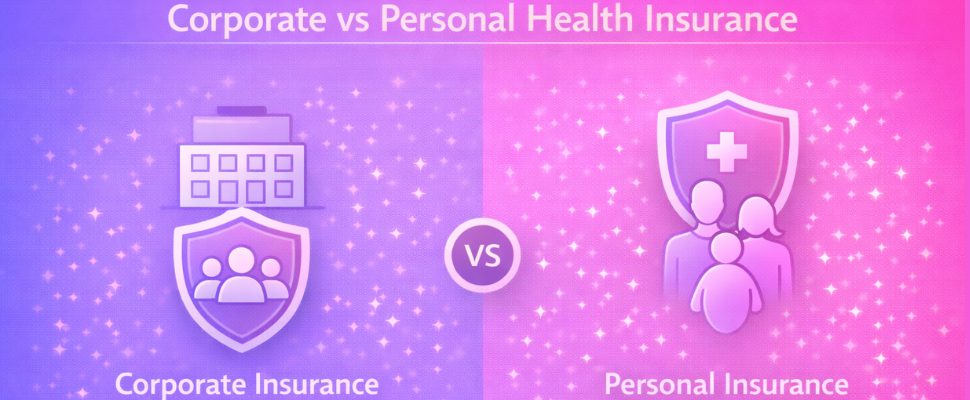
Health insurance gives you important financial safety. It helps protect you from unexpected medical costs. In India, people usually get this protection in two ways. Often, employers provide it as corporate health insurance. Sometimes, individuals buy a personal health insurance plan directly.
Medical costs are rising steadily across India. Experts expect employee medical plan costs to go up by about 11.5% in 2026. So, knowing your choices is very important. This guide will explain corporate insurance compared to personal insurance. We will show their differences and benefits. This will help you choose well.
What is corporate health insurance?
Corporate health insurance is a group plan. An employer often offers this plan to its staff. The company gives this insurance. It covers workers' medical costs. Often, the company picks the plan. It pays most or all of its monthly fee. This makes it a key part of employee benefits. Understanding the nuances of corporate health insurance vs personal health insurance helps staff make informed choices.
This type of group health insurance usually has many good points. Employees often get coverage for free or at a very low cost. All staff members generally receive the same benefits from the group plan. These plans sometimes include immediate family members as well. Many plans cover existing health problems (PED) right away. This depends on the insurance company. New employees typically do not have to wait to get coverage. It is important to consider how corporate health insurance and personal health insurance differ.
Key benefits of corporate plans
Company health plans offer you quick medical protection. Employers provide these plans as a staff perk. This helps show how corporate insurance differs from personal insurance.
• You often get cover right away, even with pre-existing health issues.
• Low Cost: The company usually pays, making it cheap for staff members.
• Signing up is easy; you typically don't need health check-ups.
• Ideal for: Basic health safety an employer provides.
limitations of Corporate health plans
Understanding the distinctions in corporate insurance vs personal insurance is crucial. Corporate health plans come with specific limitations. It is important to know these points when comparing company insurance with personal insurance.
• Your coverage typically stops when you leave the job. This means you cannot simply carry the policy forward.
• Choices are often limited. There are usually few options for the total sum insured.
• The employer controls your policy. They might change or even end the coverage. Best For: Basic health needs, but not as your only long-term protection.
What is personal health insurance?
An individual health insurance policy is one you buy for yourself. You get this type of plan directly from an insurance company. The person holding the policy pays the premium. They keep full control over their personal health plan. This coverage offers long-term protection. It stays with you, no matter your job status. This is the main difference between corporate insurance and personal insurance.
• You choose your coverage amount and features. This makes your plan truly customizable.
• The plan belongs to you, not your employer.
• Often, you can move your policy to another insurer when it is time to renew.
• A medical check-up might be needed before your policy starts.
Key benefits of personal plans:
Confused between health insurance plans?
Let AI decide for you.
- AI compares 30+ insurers
- No sales pressure
- Result in 60 seconds
- 100% free
No spam. No calls unless you want them.
Personal plans offer strong, lasting safety. They give you cover that goes beyond what your job provides. This difference matters greatly when you compare corporate insurance with your personal insurance.
• Your cover can last your whole life with timely payments.
• Choose your desired cover amount and add useful features easily.
• Get tax breaks for premiums paid, under Section 80D of the Income Tax Act. Best For: Health safety designed just for you, meant for the long run.
limitations of personal health insurance
You can renew personal health insurance throughout your life. But it does come with certain limits. Knowing these points helps you compare it with corporate insurance plans. This knowledge is important for your financial health.
• A waiting period applies for existing health issues, often from two to four years.
• You will pay the entire premium yourself.
• Some plans may require a medical check-up before you get coverage.
• You must actively research and handle the policy details.
Best For: Individuals seeking specific, long-term coverage they can fully manage.
Difference Between corporate and personal health insurance:
Knowing the differences between Corporate Insurance vs Personal Insurance matters for your money. This part compares these two kinds of plans. It shows the main policy differences. A full insurance comparison helps you pick wisely.
Both company and personal plans offer different good points. Company plans typically have lower costs for staff, or sometimes no direct cost at all. They often give a group discount. However, what they cover might be basic, with fewer options to change it. A personal plan, like a health plan for just one person or a family, gives you more freedom. You choose your sum insured, which is the total money covered. You also pick extra features. You manage this plan yourself each year.
A company plan stops when you leave your job. A personal plan stays active as long as you pay for it. This offers you long-term safety. Personal plans also give tax benefits under Section 80D. Waiting periods are another key point to discuss. Company plans, in some cases, remove initial
waiting periods for certain health issues. Personal plans apply standard waiting periods. These are often 2 to 4 years for health problems you had before.
The final choice often means balancing different things. Company plans offer ease and lower upfront costs. Personal plans offer long-term safety and more freedom. For a full picture, look at a detailed comparison table of features and costs.
Policy ownership and control
Let's look at corporate and personal insurance plans. A person buys a personal health policy and owns it. You pick your own plan from companies like Niva Bupa or HDFC ERGO. This gives you full control. You decide the sum insured and the exact benefits you want. A person chooses their
preferred coverage options. Personal plans typically offer more flexibility. This policy stays with you, even if you change your job. You handle all renewals and claims directly with the insurer. This differs from corporate health plans, where your employer makes these choices.
Cost and premiums
Confused between health insurance plans?
Let AI decide for you.
- AI compares 30+ insurers
- No sales pressure
- Result in 60 seconds
- 100% free
No spam. No calls unless you want them.
A key difference in corporate insurance vs personal insurance is who pays the premium. For company insurance, employees often pay little or nothing. The company usually covers these costs. With personal plans, you pay the full premium yourself. Your age and health often change this payment amount. This distinction is central to understanding corporate insurance vs personal insurance.
Customizing your coverage
Let's compare corporate insurance vs personal insurance. Company health plans usually give basic protection to all staff. These plans often have a set amount they will pay. Most also come with a set list of benefits. Workers generally have few choices to change these rules.
Personal health insurance provides much more freedom. You can truly make your plan just right. It will suit your health needs and what you can afford. This custom plan ensures it meets your special needs, unlike the basic benefits of many company plans.
With personal plans, you can: * Pick your sum insured based on your family size and where you live. * Add extra benefits, such as critical illness cover or maternity protection. * Choose specific plan features like no-claim bonus safeguards or restoration benefits.
Continuity and portability
Corporate health insurance plans cover you only while you are working for a company. This job-based plan stops the moment you leave your employment. Your family will also lose their health coverage at that point. It is often tough or impossible to shift this coverage to a new personal plan. This might leave you unprotected when you switch jobs. It's really important to know the difference between corporate insurance vs personal insurance. A personal health plan gives you steady protection, even if you are not working. You can keep it for your entire life. IRDAI rules help you move personal policies easily. This makes sure you keep your health coverage, even with different insurers.
Find the right personal health plan with Cover Tiger
Finding the right personal health plan can be tough. Cover Tiger makes this simpler with its AI-powered system. The platform offers smart, fair advice. It helps you grasp the difference between corporate insurance vs personal insurance. You can review good options without any push.
Our powerful AI insurance comparison tool lets you compare health insurance plans easily. You can check choices from major Indian insurers, including Star Health and HDFC ERGO. This helps you find coverage that truly fits your budget and needs. The platform lets you buy health insurance online. It shares clear facts, guiding you to make a smart choice. This ensures full protection beyond your basic job plan.
Conclusion
Corporate insurance often gives a good start. But it should not be your only shield. A personal health plan offers crucial long-term protection. It gives you control and more choices. This matters a lot for corporate insurance vs personal insurance.
The best insurance strategy involves using both plans. Rely on corporate cover for smaller needs. Your personal plan ensures full security. This helps with smart financial planning.
Frequently Asked Questions
Confused between health insurance plans?
Let AI decide for you.
- AI compares 30+ insurers
- No sales pressure
- Result in 60 seconds
- 100% free
No spam. No calls unless you want them.
Can I convert corporate health insurance to personal?
Yes, you can definitely port your corporate health insurance to an individual policy. This allows you to carry forward benefits like waiting period credits, but it's important to apply within a certain
timeframe, typically 30-45 days of leaving your employer (do check your specific policy terms). The new policy's terms will then be decided based on your current age and health.
How do tax benefits differ for corporate versus personal health insurance?
With personal health insurance, you claim tax deductions under Section 80D for premiums paid for yourself and family. Corporate policies, on the other hand, are typically a business expense for the employer. Employees usually don't claim 80D benefits for these employer-paid premiums, as it's often not taxable as a perquisite (always confirm with your payroll department).
What happens to the No-Claim Bonus (NCB) from a personal policy if I only claim from my corporate plan?
Your No-Claim Bonus on your personal policy isn't affected. A claim from your corporate group plan is treated separately, as it's typically a distinct contract. So, your personal NCB will keep accumulating (assuming no claims against that specific policy), either increasing your sum insured or reducing your renewal premium.
What are sub-limits in a health policy and are they more common in corporate or personal plans?
Sub-limits are caps on specific health policy expenses, like room rent or certain procedures (e.g., cataract surgery). A Rs. 5,000 room rent limit means your insurer won't pay beyond that daily amount. You'll typically find more sub-limits in older corporate group plans, primarily to manage overall premium costs. Personal plans often give you options for fewer such restrictions.
Does my personal health insurance premium increase if I make a claim using my corporate policy?
No, a claim on your corporate policy won't affect your personal health insurance premium. These are entirely separate contracts. Your individual policy's premium is assessed based on claims made just for under that plan, alongside your age and health at renewal (this can vary by insurer). Corporate group plans typically have their premiums determined by the employer's overall claims experience.
Is maternity coverage better in a corporate or a personal health insurance plan?
Corporate plans typically offer quicker maternity access, often waiving the standard 2-4 year waiting period found in personal policies. They usually provide better sub-limits for delivery costs too. A personal plan, however, offers long-term continuity once its waiting period is over (this can vary), which is great for future planning.

Written By
Raj Shankar
Principal Officer and General Manager at CoverTiger
With over 7 years of experience in the insurance and fintech industry, Raj Shankar has helped 10,000+ customers secure their families with the right insurance solutions. He has worked with leading brands such as Policybazaar, INDmoney, and CoverTiger, building strong expertise in health insurance, life insurance, sales leadership, and customer advisory. His mission is to make insurance simpler, more transparent, and accessible for every Indian family.