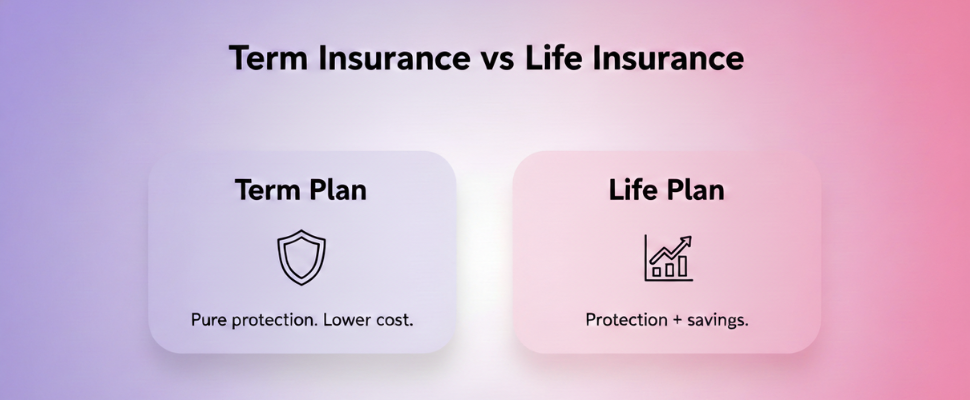
Many people in India often confuse 'term insurance' with 'life insurance'. These are different insurance types, designed for distinct money goals. Knowing this difference is key for smart financial planning.
The main difference lies in their purpose. Term insurance typically covers only risk. It pays money if the policyholder dies within the policy term. Other life insurance plans, however, combine this safety with a savings option. Picking the wrong one might leave you without enough cover, or you could pay too much.
This guide will explain term insurance vs life insurance simply. We will check their costs and what benefits they offer. This helps you fit them into your financial plans for 2026.
Key Takeaways
- Term insurance gives you pure protection. It does not include a savings part.
- Regular life insurance, however, links a death benefit with a low-return investment. This highlights the term and life insurance difference.
- Most people find term insurance offers high coverage, often Rs. 1 Crore. Its cost is much lower. This makes choosing between term insurance and life insurance a clear financial choice.
- You can use the 'Buy Term, Invest the Rest' strategy. Put the money saved on premiums into options like PPF or Mutual Funds. This generally helps you grow your wealth better when picking life or term insurance.
- Normal term plans do not give money back at the end. You get no payment if you live past the policy term. This is why premiums stay low.
Term Insurance vs Life Insurance: The Core Differences
The main 'term vs life core difference' lies in their basic purpose. Understanding this helps you choose better.
- Term Insurance: This plan offers pure protection. It provides a big payout if the person insured passes away during the policy period. You cannot save or invest money using this kind of policy.
- Life insurance policies, like endowment or whole life, blend protection with a savings feature.
- They give a death benefit, and also a maturity benefit. You receive funds if you live until the policy ends.
This highlights the core 'difference between term insurance and life insurance'. Term plans typically offer high coverage for a small payment. Other life plans usually need larger payments for a smaller payout sum. However, they return money when the policy closes. Your financial aims often decide if you pick 'life or term insurance'. Term insurance is good for covering risks. Life insurance can help you save slowly over time. This explains the 'term and life insurance difference'. For many, 'term insurance vs life insurance' is about pure protection needs.
What Is Term Insurance?
Knowing what is term insurance is key for your money plans. It is a specific kind of life insurance. This plan gives your family financial safety. You pick a 'sum assured'. This amount goes to your family if you pass away. The cover lasts for a set 'policy term'. This term can be 10, 20, or even 30 years.
Term insurance offers a 'pure risk cover'. It mostly focuses on protecting against the risk of death. Premiums typically stay fixed for the whole policy term. For example, your premium will not change for 20 or 30 years. This lets you budget easily.
The 'death benefit' is paid to your nominees. This only happens if you die during the chosen policy term. If you live past the policy term, you usually get no money back. Standard term plans generally do not include a maturity benefit. This is a main difference when we talk about term insurance vs life insurance.
Key Features of Term Plans
Term plans give simple protection. They offer money safety for your family. This helps you compare term insurance vs life insurance choices.
- Get Rs. 1 Crore or more cover for your nominee.
- Low Premiums: Often, you pay as little as Rs. 400 each month.
- This plan does not build any savings or investment.
- Set Policy Term: Your cover lasts for a specific time, perhaps 20 or 30 years.
These plans suit people who want high money protection at a low cost.
Types of Term Insurance
Knowing the different types of term insurance is helpful. This knowledge lets you plan your finances better. It also makes it easier to compare term insurance with life insurance options.
Level Term Plan This is the most common kind of term plan. The total money covered stays the same for the entire policy period. Also, the payments typically remain fixed. * Your sum assured does not change. * Premiums usually stay stable. * It offers a clear, predictable cover for your family. Best For: Families seeking steady, long-term financial protection.
Increasing Term Plan The amount of money you are covered for actually grows over the policy's life. This can help keep up with rising costs or growing family needs. * The sum assured goes up each year. * It helps protect against inflation's impact. * Premiums might rise, or they could stay level depending on the plan. Best For: Younger workers expecting more financial duties later on.
Term Return of Premium (TROP) Plan With this plan, you get back all the payments made if you live past the policy term. The actual coverage works much like a standard term plan. * You receive your premiums back at the end. * These plans often cost more than pure term insurance. * It still provides a benefit if you pass away during the term. Best For: Those wanting safety, but also expecting money back from their payments.
Not sure how much term cover you need?
Let AI decide for you.
- AI compares 30+ insurers
- No sales pressure
- Result in 60 seconds
- 100% free
No spam. No calls unless you want them.
What Is Life Insurance?
Many people ask: what is life insurance? In its wider meaning, it refers to traditional plans. These plans combine life cover with a way to save money. An endowment plan, for example, offers both. A whole life insurance policy also provides these benefits.
A part of your premium covers the risk. The insurer typically invests the rest. This arrangement helps you save money over time.
Traditional life insurance plans build a cash value. Policyholders usually get this amount when the plan ends. This is called a maturity benefit. Some plans, like money-back policies, also pay small amounts regularly. This combined approach often means much higher premiums. They are much higher than pure protection plans such as term insurance.
Understanding what life insurance means in this way clarifies the main difference in the term insurance vs life insurance discussion.
What are the common types of life insurance plans?:
Different life insurance plans offer features beyond simple term insurance. These plans often combine life cover with options for saving or investing money. Learning about them helps you pick between 'term insurance' and 'life insurance'.
- Whole Life Insurance: This cover lasts your whole life, often until age 99 or 100. An Endowment Plan gives a lump sum payment when it finishes, or if you die.
- ULIPs, or Unit Linked Insurance Plans, typically link your returns to how the market does.These plans work well for people who want both life protection and a way to save or invest with their premium payments.
Term vs life insurance: how do they actually compare?:
To start, it helps to know what term insurance and life insurance plans are. After that, we can look at their exact differences. This comparison of term vs life insurance will make their main purposes clear for you.
We will check several key points for a full breakdown. These include the cost, any money you might get back, and how easy it is to change the plan. This simple comparison of term insurance and life insurance shows how each plan helps with different money goals.
Cost of Premiums
Term insurance plans are usually quite cheap. They give a big sum of money for a small monthly payment. This is because term plans only pay out if the policyholder dies. They do not have any savings part. For instance, a healthy 30-year-old can often get a Rs. 1 crore term cover for less than Rs. 1000 each month.
Traditional life insurance plans, like endowment or whole life policies, have higher monthly payments. Part of your payment covers your life. The insurance company invests the rest. This money then grows over time.
Returns and Benefits
Term insurance does not give money back at the end. If you live longer than the policy term, no money is paid. The main benefit is the sum paid to your chosen family if you pass away during the policy term. This is purely a protection product.
Traditional life insurance policies, however, typically give you money back when the policy ends. This money comes to you if you outlive the policy term. This payment often includes extra bonuses. Your chosen people also get money if you die during the policy term. This is a key difference in term insurance vs life insurance benefits.
Flexibility
Term insurance plans let you pick how long the policy lasts. You can choose a term that fits your working years. It can also match big money debts. For example, you might buy a plan for 20, 30, or even 40 years.
Traditional life insurance plans, such as whole life policies, cover you for a very long time. This cover can last up to 100 years. Their structure is usually less flexible once you buy them. This full breakdown of the difference between term insurance and life insurance helps people choose what they need most.
What you'll pay: premium costs and affordability:
Term insurance often costs much less than other life plans that include an investment part. A 30-year-old might pay just Rs. 1,000 each month for a Rs. 1 Crore term plan. Yet, for a Rs. 10 Lakh endowment plan, the same person could pay Rs. 8,000 monthly. This shows a big difference in cost between term insurance vs life insurance.
- You get a large life cover with lower payments for term insurance.
- Plans with an investment portion generally have much higher premiums.
- These higher payments also help build a lump sum that you get later.
Best For: People who want the most coverage for the least money.
Maturity and survival benefits explained:
Not sure how much term cover you need?
Let AI decide for you.
- AI compares 30+ insurers
- No sales pressure
- Result in 60 seconds
- 100% free
No spam. No calls unless you want them.
With term insurance, you get no money back if you live past the policy term. It works purely as a protection plan. This makes a key difference between term insurance and life insurance. Regular life insurance plans promise to pay money when the plan ends. This payment typically includes the main sum and any extra bonuses. Many find it acts like forced savings.
- Term plans do not pay out if you are still alive; the money spent is just for cover.
- Life insurance plans promise a payout when they finish. Most offer tax benefits under Section 80C.
- These policies give a clear path to save money for many years.
Best For: Individuals seeking guaranteed money back and a structured way to save funds regularly.
How long you're covered: policy tenure and duration:
The duration of your coverage often highlights the differences in term insurance vs life insurance. Term plans typically protect you for a set period. For instance, coverage might last until you turn 75. Whole life plans usually cover you until you pass away or reach age 100. Your need for money protection often shrinks as you get older.
- Term plans guard your family during your main earning years.
- Long-term protection for your nominee is offered by whole life plans.
- Coverage needs typically decrease a lot after you stop working.
Best For: Matching the policy's length with your family's changing financial needs.
Surrender value and your flexibility options
Surrender value matters when you compare term and traditional life insurance. Term plans give no surrender value if you stop premiums. They simply close.
- Traditional life insurance plans usually build surrender value after two or three years.
- This amount gives policyholders some money choices.
- But, getting this money means you must end your protection plan.
Best For: People who want a possible cash value from their insurance later.
Why Term Insurance Is the Smart Choice
When people compare term insurance vs life insurance, many experts suggest term plans. The idea to buy term invest the rest often works well for families. You get strong protection for a small price. This also lets you invest your extra money for potentially better returns.
Keeping your insurance separate from investments generally brings better results. A pure term plan offers large coverage, often Rs. 1 Crore or more, for low payments. This big cover is key for good financial planning. CoverTiger term insurance helps you find the best term insurance India has. This platform shows plans that are only for protection. So, there are no hidden costs. This helps secure your family's money future.
Who Should Buy Which Plan?: Life Or Term Insurance
Knowing about term insurance vs life insurance helps you pick the right plan. This simple guide shows who should buy term insurance and who needs life insurance.
Pick Term Insurance If. You are the main person earning for your family. Often, people with young children depend on them. If you have big loans, like a home mortgage, this plan is helpful. You get high coverage for a low premium. Also, you might want to invest your other money separately for better earnings.
Pick Life Insurance If. You are a wealthy person. Sometimes, you need it for estate planning. You might also want a forced savings plan. An endowment plan or whole life insurance often provides this. For a child with special needs, these plans can secure funds for their future.
Can You Have Both Term and Life Insurance?:
Yes, you can have both term and life insurance policies. Many people wonder, "can I have two life insurance policies?" This is a wise approach for many families.
You might buy a large term plan for your main earning years. This gives a big sum assured when your family needs it most. Separately, you could get a smaller whole life policy. This typically covers final expenses or leaves money for loved ones.
Insurers in India allow multiple insurance policies. However, all your plans' total sum assured should match your Human Life Value. This value depends on your income and age. Knowing your
"term insurance vs life insurance" options helps you plan better. Valid death benefits from these policies go to your nominees.
How to Find the Best Term Plan on CoverTiger:
Not sure how much term cover you need?
Let AI decide for you.
- AI compares 30+ insurers
- No sales pressure
- Result in 60 seconds
- 100% free
No spam. No calls unless you want them.
Finding a good plan is easy with CoverTiger. This platform simplifies your search for term insurance. You can quickly compare term insurance online from many providers. Leading Indian companies, like HDFC Life and ICICI Prudential, are listed here.
Start by sharing your age and income details. CoverTiger then suggests plans matching your needs. This helps you understand the difference between term insurance and life insurance policies.
You get a clear comparison of each plan's death benefit. The platform shows all policy details openly. There are no hidden rules. You can also add critical illness or accidental death riders. This typically ensures you get the right protection. Try CoverTiger's fair insurance comparison today. Check your personal term plan cost now.
Conclusion:
It's easier to pick between term insurance vs life insurance if your goals are clear. Most people find term insurance conclusion points to its core purpose. It offers pure protection, making it a strong tool for financial security. This plan guards against life's unexpected events.
Regular life insurance includes an investment part. It works well for certain goals, like saving money or leaving a legacy. However, a Term plan typically remains the top choice for most families. You should carefully check your financial dependents and any debts you have. Visit CoverTiger today to figure out how much coverage you truly need.
Frequently Asked Questions
Q: Which is better term insurance or life insurance?
Actually, one isn't inherently better; it's about aligning with your specific financial needs. Term insurance offers pure life cover for a fixed period, typically with lower premiums, ideal for securing your family's future income. Traditional life insurance plans, like ULIPs or endowments, combine this cover with a savings or investment component (this can vary widely). Your choice depends entirely on whether you're seeking just protection or a blend of savings and cover.
Q: What are the disadvantages of term insurance?
Term insurance won't give you any maturity benefit if you outlive the policy term. There's no cash value accumulation, so you can't take loans against it (a key difference from ULIPs, for instance). Also, once your term expires, the coverage ends, and buying new cover typically costs more due to your age.
Q: Which is better, whole life insurance or term insurance?
It really isn't about which is "better," but what fits your individual situation. Term insurance offers pure, high coverage for a set period at a very low premium (a great budget option for young families). Whole life, however, combines lifelong protection with a savings component, building cash value over time. Your financial goals and life stage will typically guide this decision.
Q: What is the difference between a life policy and a term policy?
A term policy is pure protection; it pays out only if the policyholder passes away during the term, with no maturity benefit for survival. A broader life policy, however, typically combines this protection with a savings or investment component (like an endowment or ULIP), so you'll also get a payout upon maturity (this can vary by plan). These plans offer tax benefits under Section 80D.
Q: What happens if I outlive my term insurance policy?
A standard term insurance policy simply expires at the end of its term; you won't receive any payout. It's purely for risk coverage, much like your car insurance. However, with a Term with Return of Premium (TROP) plan, you'd typically get all your premiums back (minus applicable GST, of course). If you still need life cover, you'll need to buy a new policy then.
Q: What is the 3 year rule in term insurance?
The "3-year rule" is essentially Section 45 of the Insurance Act, 1938. After three years from your policy's start date or revival (whichever is later), the insurer typically can't dispute your claim on grounds of misrepresentation or non-disclosure. This provides significant security for you; it's a vital protection for policyholders.
Q: Is the death benefit from term insurance tax-free under current laws?
The death benefit received by your nominee from a term insurance policy is indeed tax-free. Under Section 10(10D) of the Income Tax Act, this exemption typically applies if the premium doesn't exceed 10% of the sum assured (for policies issued after April 2012). This ensures your family receives the full amount without any tax deductions.
Q: Can I buy term insurance if I already have a corporate life cover?
You certainly can. Your corporate cover, often a group policy, typically provides limited benefits (perhaps 2-3x your salary). A personal term plan offers higher, tailored coverage for your family, plus you'll keep it even if you switch jobs (this isn't usually portable). It's your truly independent safety net.

Written By
Raj Shankar
Principal Officer and General Manager at CoverTiger
With over 7 years of experience in the insurance and fintech industry, Raj Shankar has helped 10,000+ customers secure their families with the right insurance solutions. He has worked with leading brands such as Policybazaar, INDmoney, and CoverTiger, building strong expertise in health insurance, life insurance, sales leadership, and customer advisory. His mission is to make insurance simpler, more transparent, and accessible for every Indian family.